Best Pet Cameras for Labradoodle Separation Training
Choose a pet camera for separation training by field of view, recording, alerts, privacy, placement, and what the footage can actually tell you.
The camera is a measuring tool
For separation training, the best camera is the one that reliably shows the exit, your dog’s resting area, and the first signs of stress. Prioritize a wide field of view, dependable recording, a visible timeline, low-light video, secure placement, and privacy controls before treat launchers or novelty features.
A camera does not treat anxiety. It helps you stop guessing whether the dog settled, paced, vocalized, watched the door, or panicked after you left.
Affiliate disclosure: This page may display affiliate camera recommendations below. We may earn a commission at no extra cost to you. Training usefulness, security, and fit determine our guidance.
Feature comparison
| Feature | Why it matters for training | Limitation |
|---|---|---|
| Continuous recording or event timeline | Lets you see when behavior changed | May require storage or subscription |
| Wide field of view or pan/tilt | Covers exit and rest zones | Moving cameras can create noise or miss an event |
| Low-light video | Useful for evening departures | Infrared detail is not the same as daylight color |
| Sound and motion alerts | Flags barking or movement | False alerts can increase owner anxiety |
| Two-way audio | Allows a controlled test | A disembodied voice can unsettle some dogs |
| Local privacy controls | Limits unnecessary recording | Features vary by account and service |
What to record
Start the camera before touching your departure cues. Note when you pick up keys, close the door, and return. Watch for changes in posture and behavior: following, freezing, panting without heat, drooling, pacing, repeated exit checking, vocalizing, scratching, toileting, inability to eat, or settling.
Record the time to first stress sign and the time to settle, if settling occurs. Those two observations are more useful than a notification saying “motion detected.”
Camera placement
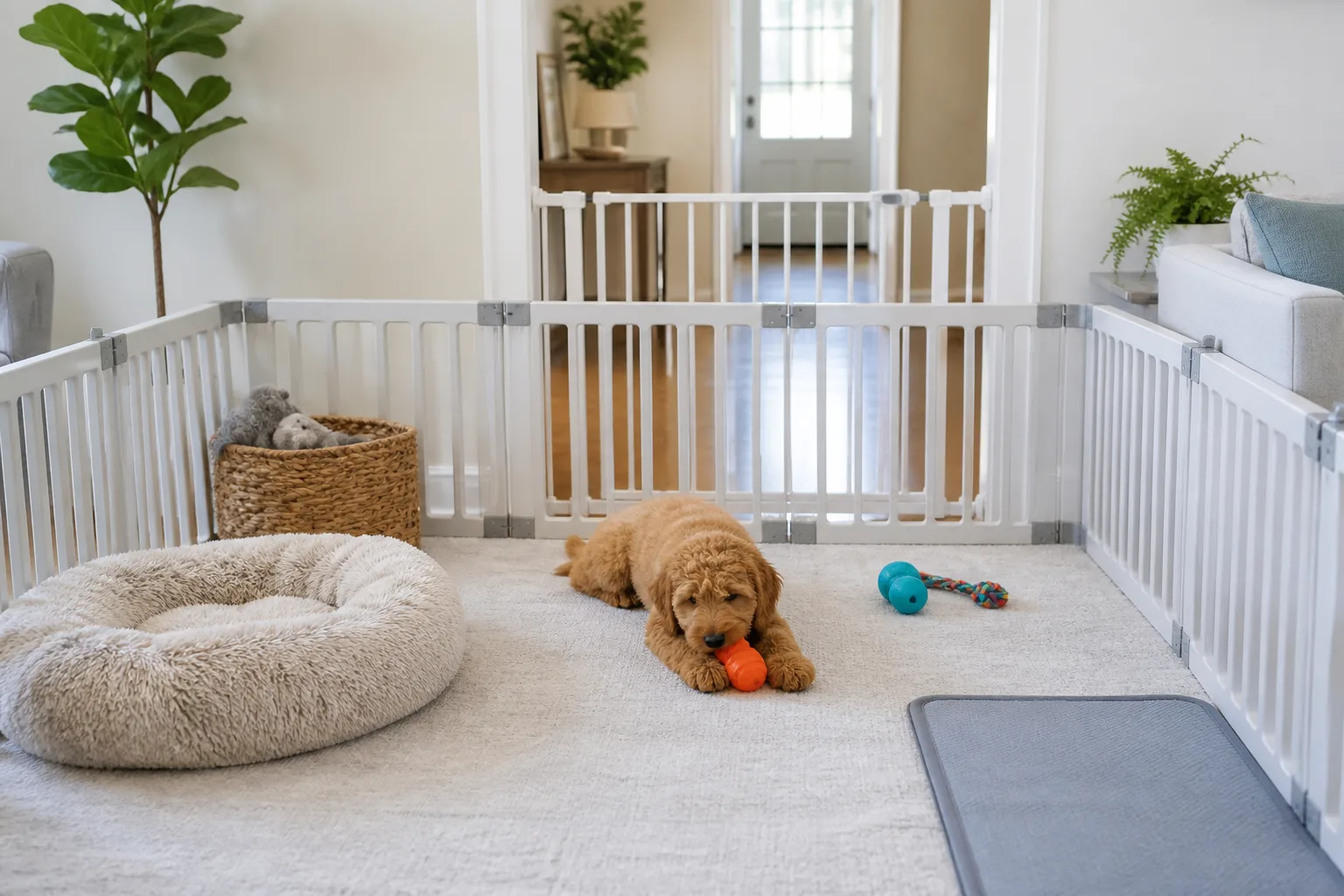
Mount the camera beyond chewing and pulling range, including its entire cable. Frame the door and likely resting place. In a large or L-shaped space, two simple fixed views may provide better evidence than one expensive moving camera.
Avoid bedrooms, bathrooms, neighboring windows, and areas used by visitors or workers unless everyone understands the recording setup.
If your dog is trying to escape, injuring themselves, drooling heavily, or remaining unable to settle, stop extending absences. Share the footage with your veterinarian or a qualified behavior professional.
A simple first recording plan
- Film five minutes while you remain home and out of view.
- Film a normal door close lasting only a few seconds.
- Review before increasing duration.
- Change one variable at a time.
- Save short representative clips with the date and duration for professional review.
Use the footage with our graduated separation-training guide. If your dog rests behind a barrier, also review pen and gate safety.
Our selection method
We compare cameras by coverage, recording access, alert usefulness, low-light visibility, mounting and cable safety, privacy controls, ongoing fees, and whether a simpler device can capture the same training evidence.
Frequently Asked Questions
Can a pet camera diagnose separation anxiety? +
No. Video can document timing and behavior, but diagnosis belongs with a veterinarian or qualified behavior professional who can consider medical and behavioral causes.
Should I talk to my Labradoodle through the camera? +
Test carefully. Some dogs settle when they hear a familiar voice; others search, become more alert, or get frustrated. Use footage to judge your dog's response rather than assuming two-way audio helps.
Where should I place a pet camera? +
Cover the exit and the area where your dog normally rests without creating blind spots. Keep the camera, cable, and mount completely out of reach and avoid recording private household areas unnecessarily.