Labradoodle Healthy Weight: Use Body Condition, Not a Chart
Assess Labradoodle weight with ribs, waist, abdominal tuck, muscle condition, growth stage, and veterinary trends rather than one breed number.
Put your hands under the coat
The healthy number for one Labradoodle may be inappropriate for another. Assess body condition and muscle condition, then use weight to track change in that individual.
The home check
- Feel the ribs with flat fingers. They should be detectable without digging through a thick fat layer.
- Look from above for a waist behind the ribs.
- Look from the side for an abdominal tuck appropriate to the dog’s build.
- Feel the spine, pelvis, and muscle rather than judging coat shape.
- Compare with a validated body-condition chart and veterinary assessment.
Weight versus size
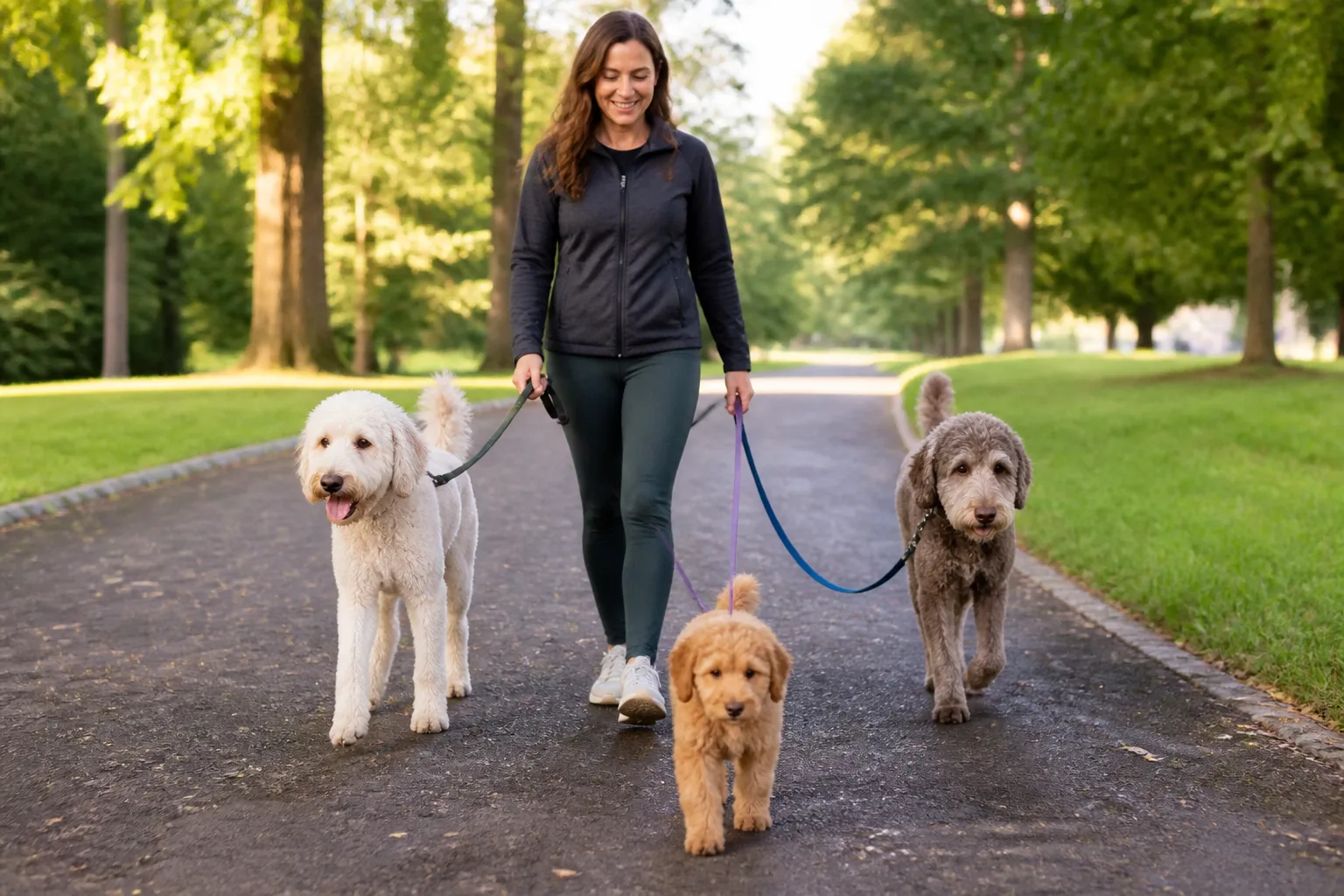
The miniature, medium, and standard size guide describes frame categories. Body condition asks whether this individual carries an appropriate amount of fat and muscle for that frame.
Track the trend
Use the same scale where possible, note time and major food or activity changes, and take consistent overhead and side photographs. A gradual change is easier to address before it becomes dramatic.
Adjust with a complete plan
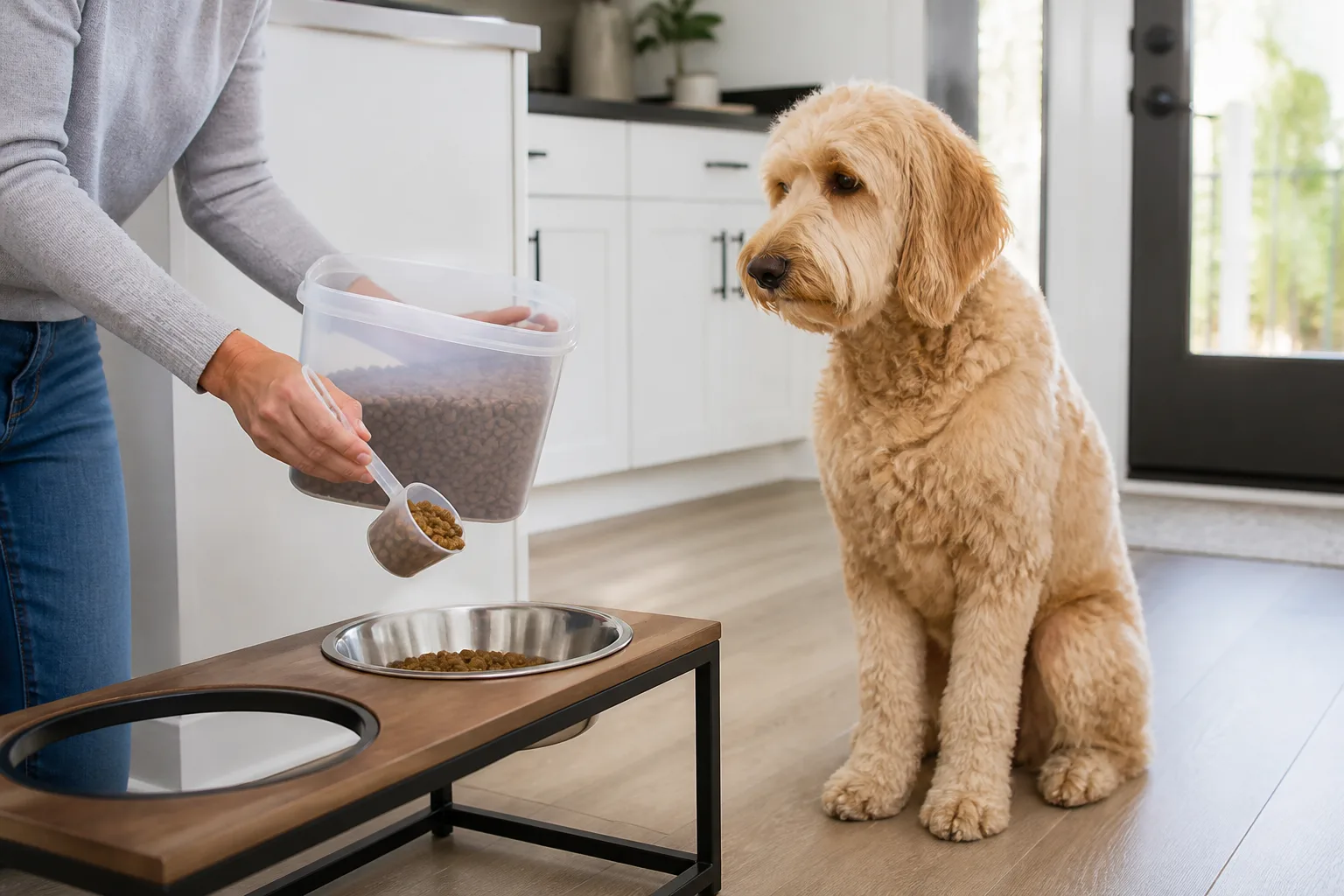
Count all food, treats, chews, toppers, and scraps. Measure by grams when accuracy matters. Change portions gradually with professional guidance, preserve nutrient balance, and match exercise to the dog’s health and conditioning.
Our adult feeding guide explains calorie density and portions.
Unexpected change needs diagnosis
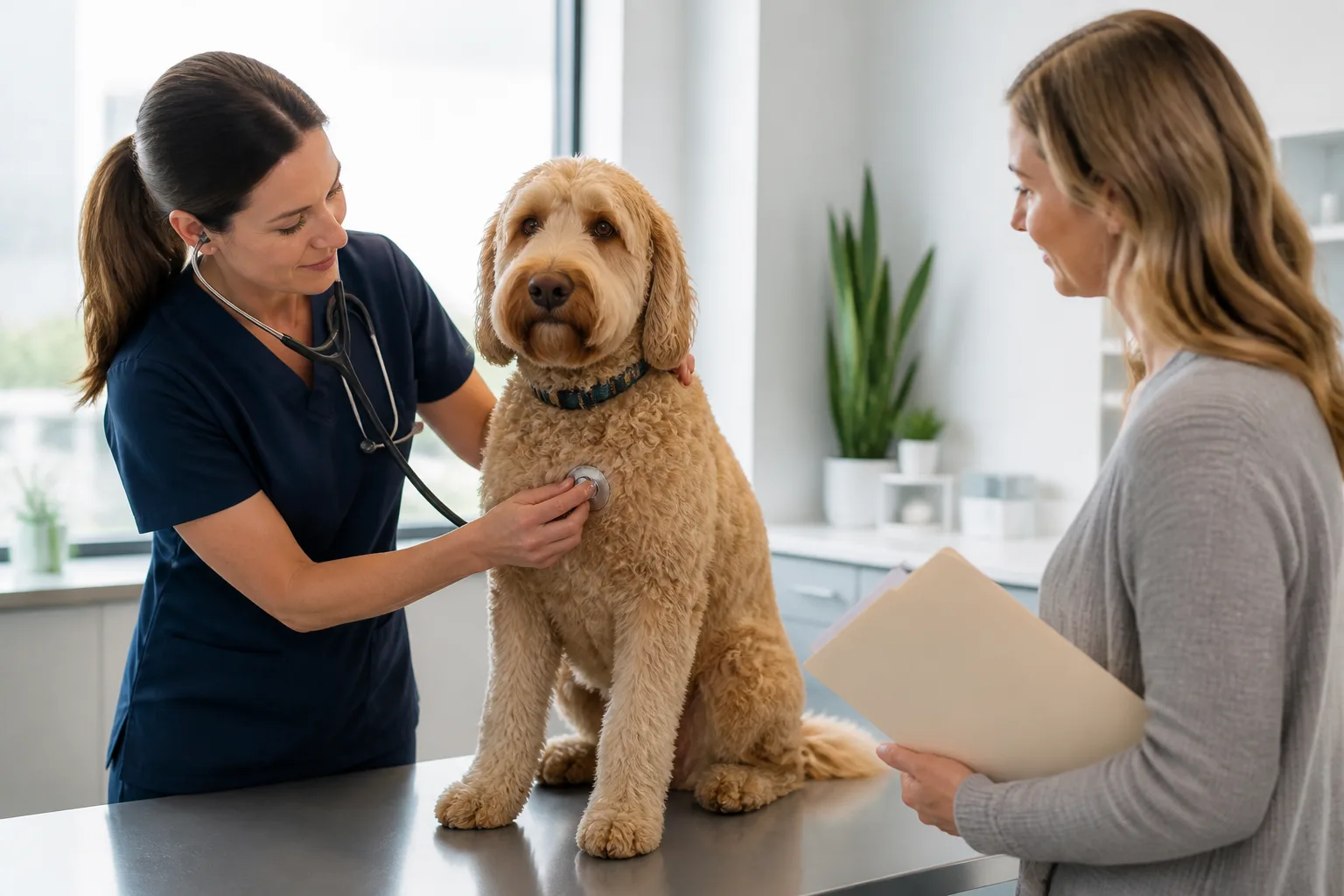
Weight gain or loss can reflect intake and activity, but also endocrine, gastrointestinal, dental, pain, medication, or other medical issues. Seek assessment for unexplained change, muscle loss, appetite shifts, increased thirst, vomiting, diarrhea, weakness, or altered behavior.
Frequently Asked Questions
What is a healthy weight for a Labradoodle? +
There is no single number because miniature, medium, and standard frames differ. Healthy weight is assessed from body condition, muscle, growth, and the individual's trend.
Can a fluffy coat hide weight gain? +
Yes. Use your hands to feel the ribs and waist, and examine the dog when wet or closely clipped rather than judging the outline of curls.
How often should I weigh my Labradoodle? +
Puppies and dogs in a weight plan may need closer monitoring. For stable adults, regular home or veterinary checks create a useful trend; follow your veterinarian's interval.