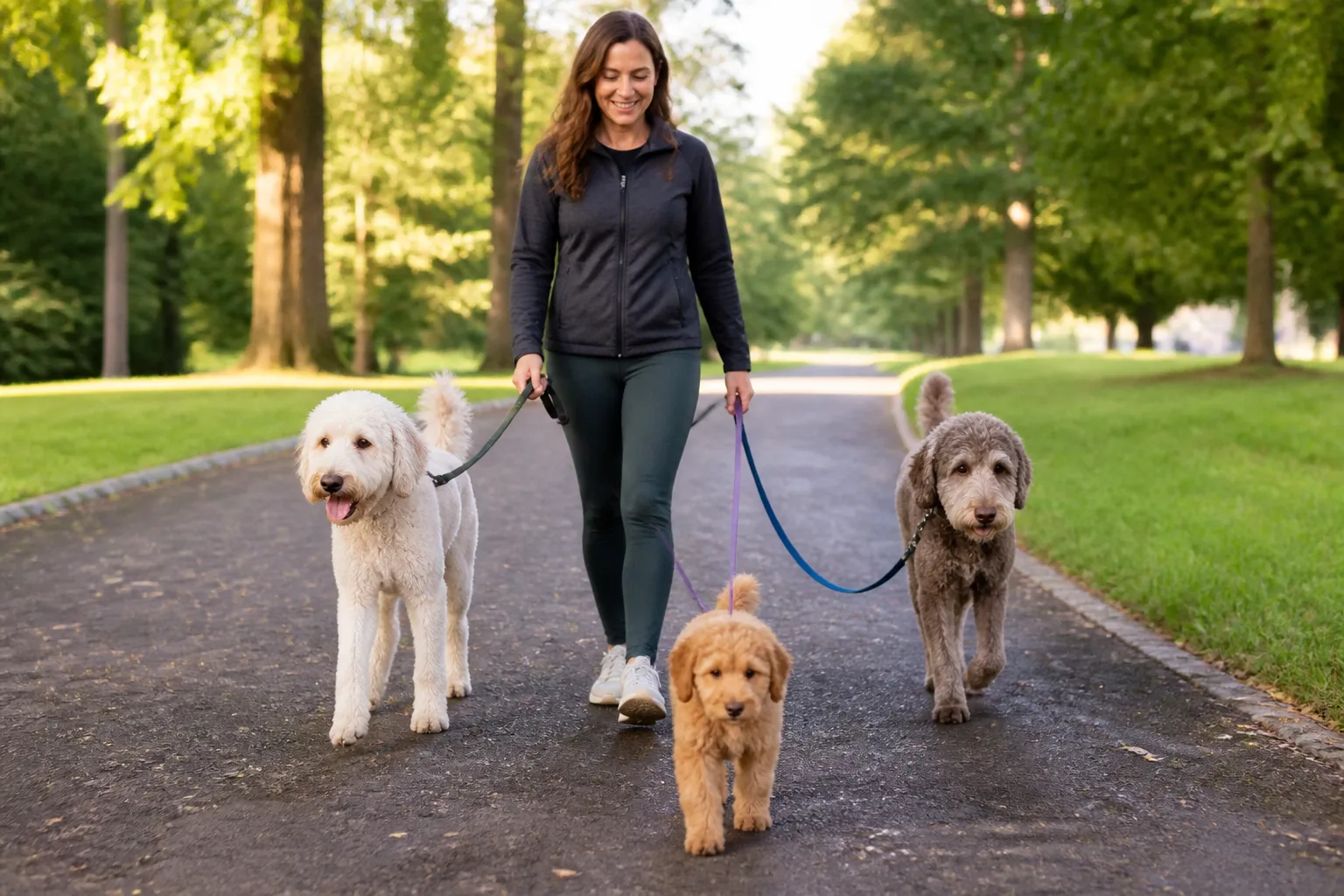
Common Labradoodle Health Problems and Screening Tests
Understand important Labradoodle health risks, the difference between DNA and clinical screening, and which records puppy buyers should verify.
Start with screening, not fear
Labradoodles can be affected by conditions from Labrador Retriever, Poodle, and established Australian Labradoodle lines. That does not mean every dog will become ill. It means breeders and owners should use appropriate screening, veterinary care, and observable evidence instead of “hybrid vigor” as a guarantee.
The main groups to understand
| Area | Examples | Screening or action |
|---|---|---|
| Orthopedic | Hip and elbow dysplasia, patellar issues | Parent radiographic evaluations; growth and weight management |
| Eyes | PRA and other inherited eye disease | DNA where relevant plus current specialist eye exams |
| Endocrine | Addison’s disease | Family history and prompt investigation of compatible symptoms |
| Skin and coat | Allergic disease, sebaceous adenitis | Clinical evaluation; breed-program screening where applicable |
| Neurologic/exercise | Exercise-induced collapse | DNA testing for relevant lines and heat/exercise awareness |
| Bleeding | Von Willebrand disease | Variant-specific DNA testing where appropriate |
| Acute emergencies | Gastric dilatation-volvulus | Know symptoms and discuss individual risk with a veterinarian |
DNA is one layer
A DNA panel can identify specific variants, but it cannot replace hip and elbow imaging, specialist eye exams, cardiac evaluation, physical health, or pedigree analysis. “Clear” should always be followed by “clear for what, using which laboratory, on which dog?”
Our genetic health-testing guide explains result terminology.
For an individual pet, an at-home DNA panel can be one useful record of the variants that particular service covers. Read the current test list before buying and keep the result in context: it does not verify the parents’ clinical screening or predict every future condition.
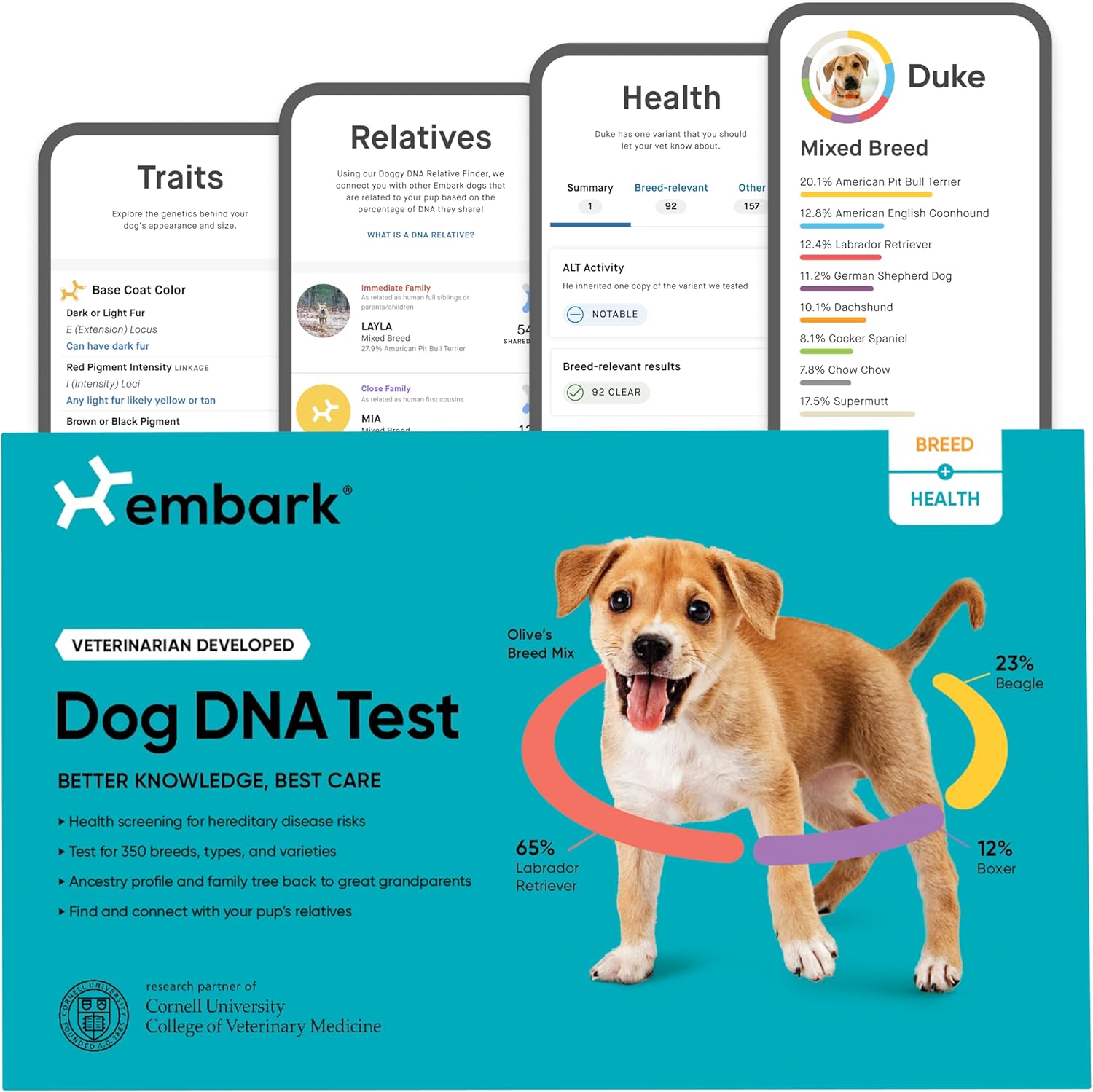
Embark Breed + Health Kit
An at-home breed and health DNA panel. Review its current variant coverage and use results alongside clinical screening and veterinary care.
Affiliate link. We may earn a commission.
Screening reduces avoidable risk and improves decisions. It cannot guarantee that a puppy will never develop disease, and a registration number alone does not show the underlying results.
What puppy buyers should request
- Registered names and permanent identifiers for both parents
- Direct links or certificates for orthopedic, eye, and relevant DNA results
- The date and issuing organization for each result
- An explanation of carrier-to-clear pairings where applicable
- Family history, longevity, and causes of death where known
- A contract explaining health support and return responsibilities
Verify records in the original database when possible. Use our questions to ask a breeder before paying a deposit.
Owner priorities after pickup
Keep the dog lean, build exercise gradually, attend preventive veterinary visits, and learn urgent warning signs. Read the focused guides on hip dysplasia, PRA, Addison’s disease, EIC, vWD, and bloat.
Frequently Asked Questions
Are Labradoodles generally healthy? +
Many live healthy lives, but they can inherit or develop orthopedic, eye, endocrine, skin, bleeding, and neurologic conditions seen in contributing lines.
Does a clear DNA panel prove a breeding dog is healthy? +
No. DNA tests cover specific variants. Hips, elbows, eyes, cardiac findings, general health, pedigree, and conditions without a simple DNA test still matter.
What does a CHIC number mean? +
For participating breeds, it means the required screenings were completed and made public. OFA explains that it does not itself mean every result was normal.