How to Teach a Labradoodle to Settle and Switch Off
Teach calm Labradoodle behavior by meeting needs, rewarding spontaneous rest, using a mat, reducing arousal, and building duration gradually.
Calm is a skill and a state
Before training, meet the dog’s realistic needs for sleep, toilet access, movement, sniffing, social contact, chewing, and food. Then notice and reward the quiet moments that already happen.
Capture calm
Keep a few rewards nearby. When your dog lies down independently with softer muscles, place a treat calmly between their paws. Do not call them up or create excitement. Over time, quiet behavior begins to pay.
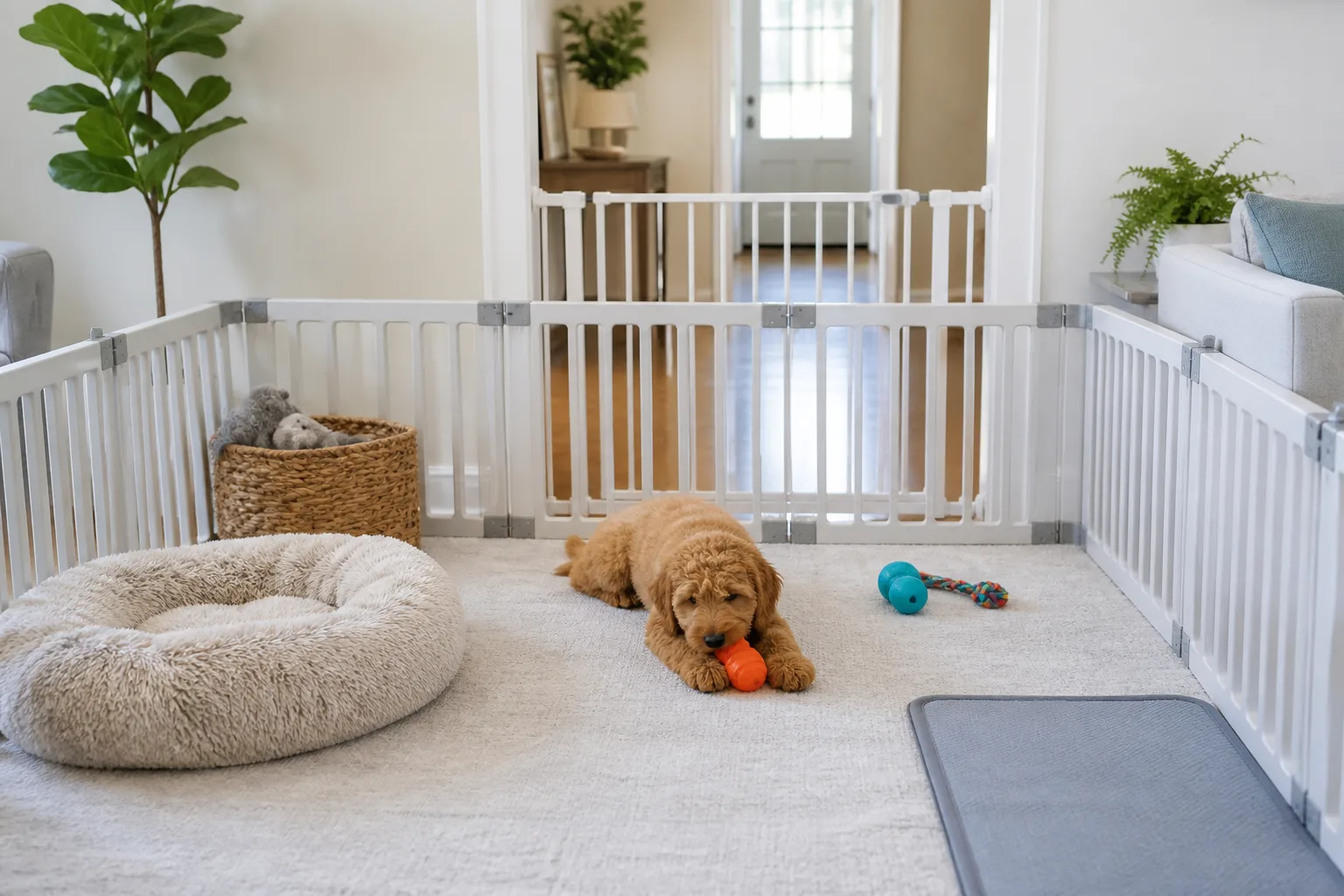
Build a mat routine
- Place a comfortable mat in a low-distraction room.
- Reward looking at or stepping onto it.
- Reward four paws, then sitting or lying down.
- Deliver slowly and low between the paws.
- Release before the dog gets up.
- Add seconds, your movement, and mild household activity separately.
Create a transition from activity
After a walk, offer water, a toilet opportunity, and several minutes of low-key sniffing or chewing. Dim the social energy. A dog returning from frantic fetch may be physically tired but neurologically activated.
If your dog relaxes while you are present but becomes restless when you leave, a pet camera can help you observe the change without repeatedly walking back into the room. Use the recording as information, not as a reason to correct behavior remotely.
Common mistakes
- Exercising harder whenever the dog is restless
- Rewarding only after barking or pawing demands attention
- Asking for long duration before the mat has value
- Confusing stillness caused by fear with relaxation
- Expecting a puppy to remain settled through adult-length events
Connect the plan to age-appropriate exercise and mental enrichment.
When restlessness changes suddenly
Pain, itching, gastrointestinal discomfort, urinary urgency, medication effects, fear, or cognitive change can disrupt settling. Seek veterinary assessment for sudden or persistent change rather than treating every problem as disobedience.
Frequently Asked Questions
Why can't my Labradoodle settle after exercise? +
The activity may be increasing arousal, the dog may be overtired, or another need may be unmet. Add a predictable transition rather than more intense exercise.
Is a place cue the same as relaxation? +
No. A dog can hold a position while tense. Reward softer body language and genuine rest, not only staying on a mat.
Can I teach calmness to a puppy? +
Yes, in very short moments. Meet toilet, sleep, food, social, and play needs first, then reward natural pauses and comfortable mat use.