The Furnishings Gene: Why Some Doodles Look Like Labs
The genetics of the 'F' locus (RSPO2). Why your F1 Labradoodle might shed and have a flat coat instead of a teddy bear look.
The “Flat Coat” Surprise
One of the biggest disappointments for new Labradoodle owners is picking up a puppy that grows up to look… just like a scruffy Lab or a wire-haired Terrier. No fluffy face, no beard, and—worst of all—noticeable shedding.
This is not a fluke. It’s simple genetics: specifically, the RSPO2 gene, universally known in the doodle world as the “Furnishings” gene 1 .
Furnishings = The Beard & Eyebrows
“Furnishings” refers to the longer hair on the face—the beard, mustache, and eyebrows—that give a doodle its signature “teddy bear” expression 2 .
- F: Furnished (dominant)
- f: Unfurnished / “Improper Coat” (recessive)
Because the trait is dominant, a dog needs only one copy of F to have furnishings:
- Poodles are FF — they always have furnishings.
- Labradors are ff — they never have furnishings.
Three separate genes shape a dog’s coat: RSPO2 (furnishings), KRT71 (curl), and MC5R (shedding) 2 . The furnishings gene controls the look of the face and correlates with an open, shedding “improper” coat when absent—but curl and shedding are inherited independently. That’s why a full DNA panel tests all three.
The F1 Generation Math
When you breed a Poodle (FF) with a Lab (ff), every puppy receives one gene from each parent.
Result: 100% of F1 puppies are Ff. Since F is dominant, they will all have furnishings and look “doodley.”
This is why F1 Labradoodles are relatively predictable in the furnishings department—but not in shedding or curl, which is why some F1s still shed.
The F2 Danger Zone
The unpredictability appears in F2 (F1 × F1) or unverified multigen breedings. If you cross two furnished F1 dogs (Ff × Ff), the Punnett square reveals:
| Genotype | Result | Probability |
|---|---|---|
| FF | Furnished (carries no improper coat) | 25% |
| Ff | Furnished (carrier) | 50% |
| ff | Improper coat — flat, shedding | 25% |
That 25% ff group is what breeders call “Improper Coats.” These dogs shed more heavily and lack the low-shedding, doodle-typical qualities that most families are specifically seeking.
How to Avoid the Flat-Coat Surprise
Ethical breeders DNA-test the parents before pairing them. If two Labradoodles are being bred together, testing for RSPO2 ensures they aren’t unknowingly producing improper-coated puppies (unless a working, flat coat is the specific goal).
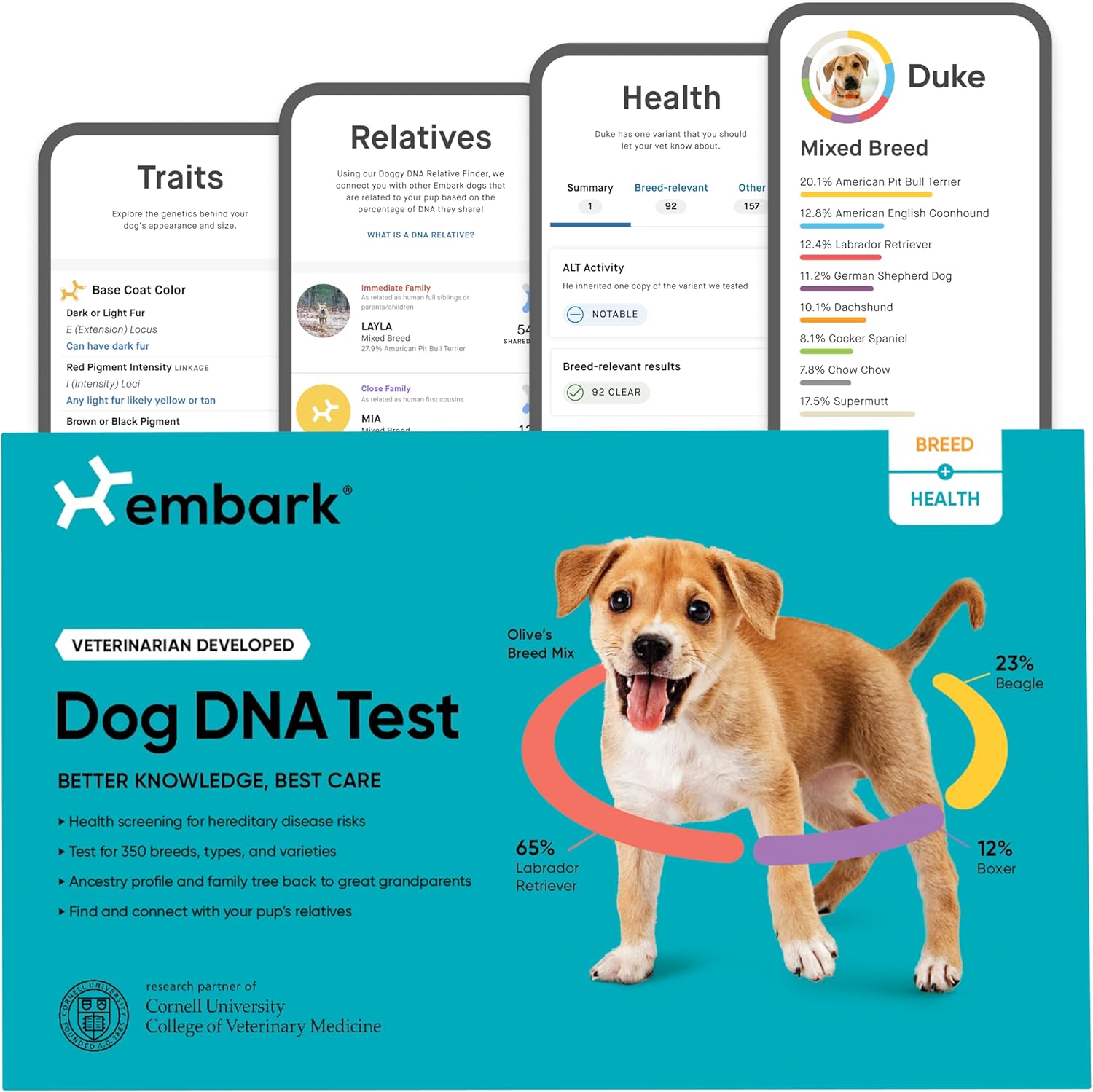
A DNA test also reveals far more than coat type. While the furnishings gene affects the look, other genes—like the merle gene—affect the health of the dog. A responsible breeder tests for both, as part of the full genetic health panel.
If a consistent low-shedding, furnished coat is your priority, an F1b (F1 × Poodle) is statistically your safest bet. The Poodle parent contributes a guaranteed dominant F gene, so every puppy inherits furnishings.
Understanding these mechanics protects you from disappointment—and helps you ask a breeder the right questions before you commit. A breeder who can explain their parents’ RSPO2 results is one who understands what they’re producing.
Frequently Asked Questions
Why does my F1 Labradoodle shed and look like a Lab? +
It likely inherited an 'improper' or unfurnished coat. Facial furnishings (the beard and eyebrows that create the teddy-bear look) are controlled by the RSPO2 gene. A dog without furnishings has a flatter, more open coat that typically sheds more—closer to the Labrador side of the family.
What does the furnishings (RSPO2) gene do? +
It controls the long hair on the face—beard, mustache, and eyebrows—that gives doodles their characteristic look. Furnishings (F) is dominant and unfurnished (f) is recessive, so a dog needs only one copy of F to have furnishings.
How do I get a Labradoodle that won't shed much? +
There's no absolute guarantee, but an F1b (F1 crossed back to a Poodle) is statistically the safest bet, because the Poodle parent reliably contributes a dominant furnishings gene. Buy from a breeder who DNA-tests the parents for furnishings and the shedding locus.
Can DNA testing predict a puppy's coat? +
Yes. Tests from labs like UC Davis VGL or Embark screen the furnishings gene (RSPO2), the curl gene (KRT71), and the shedding locus (MC5R). Testing the parents lets a breeder predict the range of coats a litter can produce.