The Ultimate Labradoodle Grooming Guide: Preventing Matting
Everything you need to know about line brushing, comb types, and maintenance for fleece and wool coats. Save money on professional grooming.
The Battle Against Matting
Every Labradoodle owner eventually faces the same enemy: matting. Those tight, painful knots that seem to appear overnight, especially behind the ears and under the collar.
The common misconception? “But I brush my dog every week!”
The reality? You may be brushing only the top layer of hair while mats quietly form close to the skin 1 . This is why so many doodles end up shaved down (“the Poodle cut”) at the groomer, much to their owner’s dismay.
Before you even pick up a brush, know what you’re working with. A fleece coat behaves very differently from a wool coat, and treating them the same is a recipe for frustration.
Why Doodle Coats Mat
Matting happens where dead hair, friction, and moisture combine. Unlike a shedding Labrador, most doodles don’t drop their loose hair—it stays tangled in the coat until you remove it. Add friction (a collar, a harness, the armpits) or moisture (a bath, a swim, a rainy walk), and loose hair felts into a mat within days. During the puppy coat change, shedding puppy fleece gets trapped in the incoming adult coat, and matting accelerates dramatically.
The Line Brushing Technique
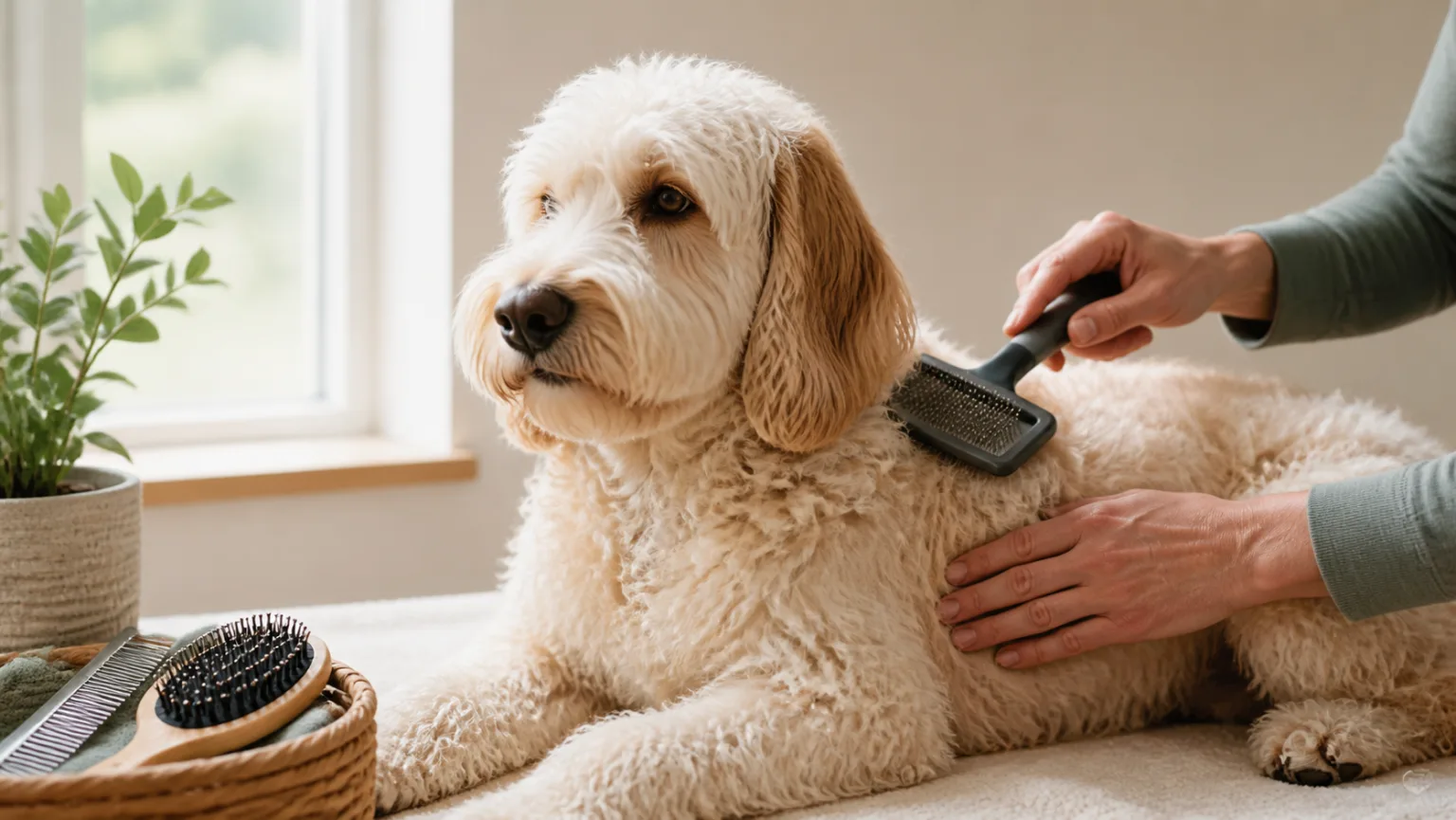
To truly maintain a long, fluffy doodle coat, you must master line brushing—working down to the skin one section at a time.
- Part the hair. Lift the coat up so you can see the skin. This is also the perfect moment to check for early signs of Sebaceous Adenitis, like silvery scaling or patchy hair loss.
- Brush down. With a slicker brush, work the hair beneath your free hand, stroke by stroke, moving up the body in horizontal “lines.”
- Confirm with a comb. After brushing a section, run a steel comb through it from skin to tip. If it snags, the mat is still there—go back and brush it out before moving on.
A slicker brush can glide over the surface of a mat and leave it intact underneath. The steel comb is the honest test: if it passes cleanly from skin to tip, the section is truly mat-free.
Essential Tools
You cannot groom a Labradoodle with a soft bristle brush—it simply won’t penetrate the thick, dense coat.
Not every Labradoodle needs the same brush. Use our brush guide by coat type to match pin length and brush style to fleece, wool, or hair coats before you buy.
Starting from scratch? The complete home grooming-kit checklist separates essentials from optional haircut equipment.
The Slicker Brush
A long-pin slicker such as the Chris Christensen Big G is one premium option for dense, longer doodle coats. The useful feature is not the brand name: it is having pins long enough to reach through the coat while remaining comfortable for your dog.

Chris Christensen Big G Slicker Brush
A premium long-pin slicker designed to reach through dense, longer coats during controlled line brushing.
Affiliate link. We may earn a commission.
The Steel Comb
A steel “Greyhound” comb is non-negotiable for checking your work. It finds the friction the brush missed and is your single best early-warning tool against mats.

Andis Steel Greyhound Comb
Essential for checking your brushing work. Finds mats that the brush missed.
Affiliate link. We may earn a commission.
Bathing & Drying
How you dry a doodle matters as much as how you brush.
The Pros
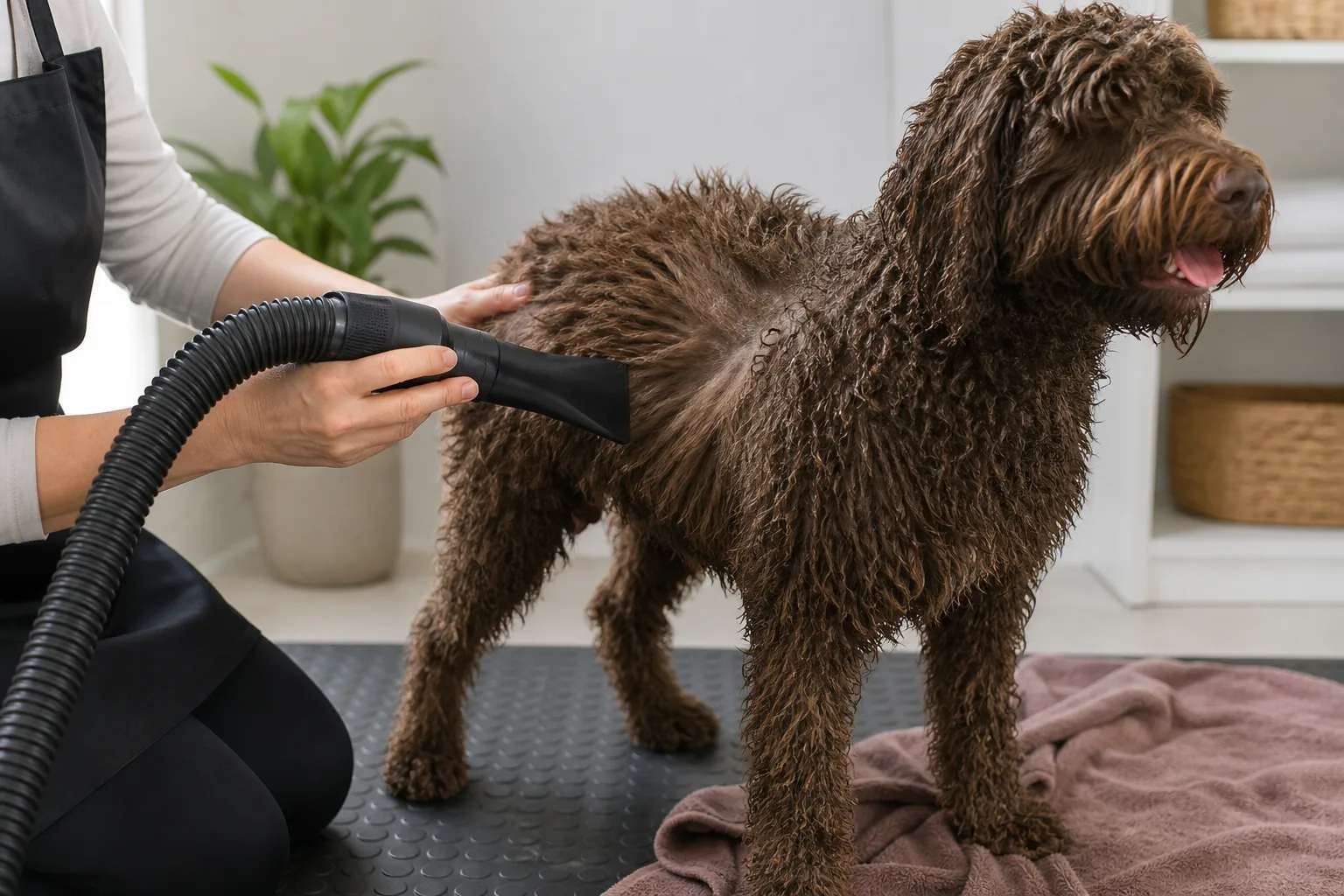
- • Blow-drying (fluff-drying) straightens the coat and prevents post-bath mats
- • Brushing while you dry catches tangles before they set
- • A fully dried coat resists matting far longer
The Cons
- • Air-drying lets damp curls tighten into fresh mats
- • Bathing a matted coat makes existing mats shrink and lock tighter
- • Skipping the ear-dry step after a bath invites ear infections
Always brush out mats before a bath—water shrinks and tightens them. After the bath, towel off and blow-dry while brushing the coat straight.
For equipment choices, compare canine dryers for dense coats and dog shampoos by skin and coat need. If you plan to cut the coat yourself, read the clipper power, blade, and safety guide first.
How Often Should You Groom?
- Brushing: At least 3 times a week, and daily during the puppy coat change (roughly 8–12 months).
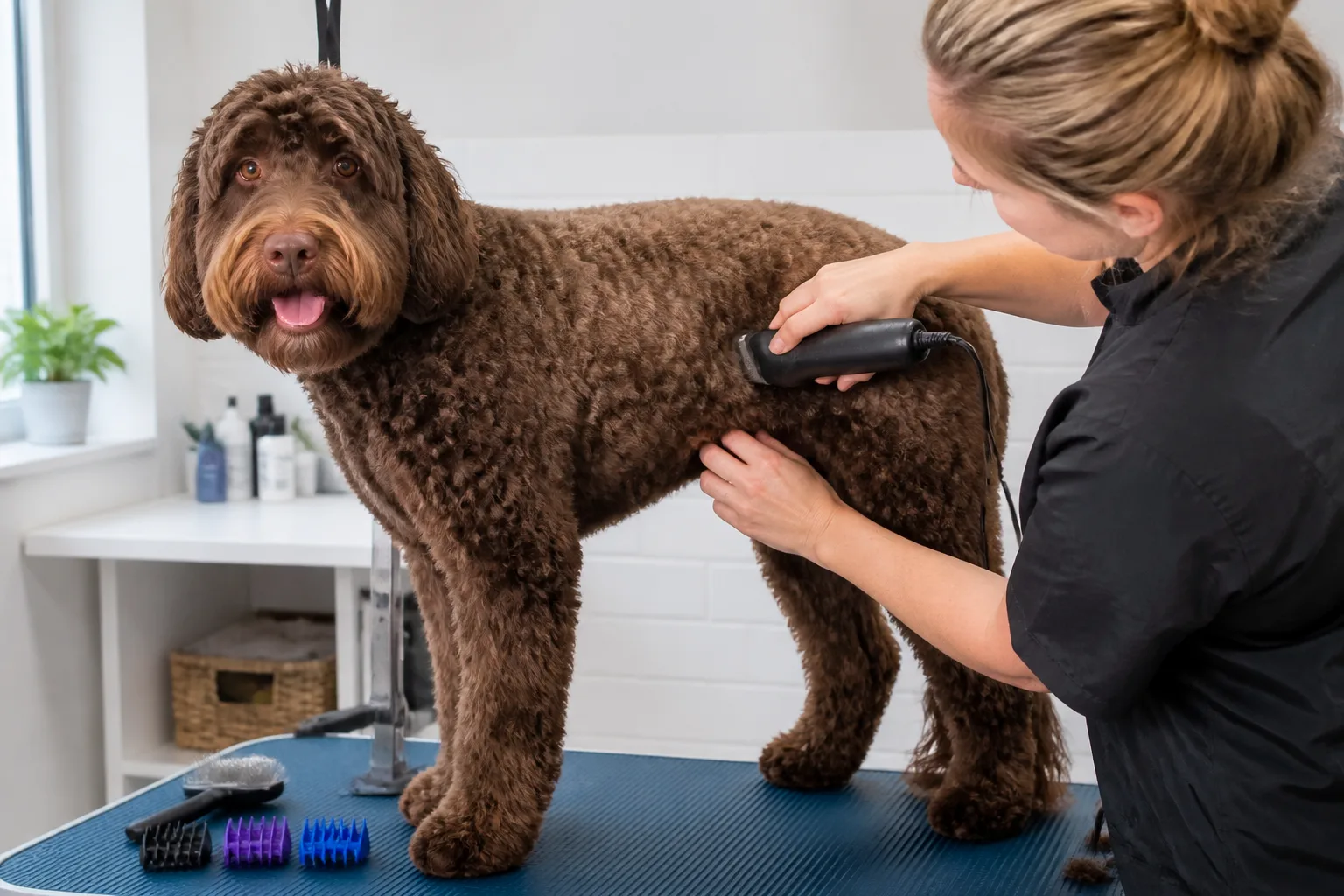
- Professional grooming: Every 6–8 weeks for a full clip.
- Sanitary trims: As needed, every 3–4 weeks.
When trimming near the nails or plucking ear hair, be cautious. Accidental nicks can be surprisingly serious if your dog has an undiagnosed clotting disorder like Von Willebrand’s Disease, which is present in some Poodle lines.
Working With Your Groomer
A good groomer is a partner, not a magician. Book regular appointments rather than waiting until the coat is a felted mess, and be honest about how much brushing you’re actually doing at home. If a coat is severely matted, a reputable, Fear-Free-minded groomer will humanely shave it rather than cause pain trying to brush it out 3 —tight mats pull on the skin and can hide sores and infection underneath.
Friction Areas to Watch
Give extra attention to the spots that mat first:
- Behind the ears
- Where the collar or harness sits
- The armpits (also a common hotspot for environmental allergies)
- The base of the tail and the “sanitary” area
Stay consistent with line brushing, dry the coat properly, and check your work with a steel comb—do that, and you’ll keep your Labradoodle looking like a teddy bear rather than a shaved sheep.
Frequently Asked Questions
How often should I brush my Labradoodle? +
At least three times a week for most adult coats, and daily during the puppy coat change (around 8–12 months), when shedding puppy fleece gets trapped in the growing adult coat. Fleece and wool coats mat quickly, so consistency matters more than any single tool.
Why does my Labradoodle keep matting even though I brush? +
You're probably brushing only the top layer while mats form close to the skin. The fix is line brushing: part the coat, brush the hair beneath your hand stroke by stroke down to the skin, then confirm with a steel comb. If the comb snags, the mat is still there.
Should I shave my matted Labradoodle? +
Humane de-matting has limits. Tight, widespread mats pull painfully on the skin and can hide sores, so a reputable groomer will shave a severely matted coat rather than torture the dog brushing it out. Prevention through regular line brushing is far kinder than repeated shave-downs.
How do I dry my Labradoodle after a bath to avoid mats? +
Never let a doodle air-dry—damp curls tighten into mats as they dry. Towel off, then blow-dry while brushing the coat straight (a technique called fluff-drying). Cleaning and drying the ears after every bath also helps prevent ear infections.