Hip Dysplasia Prevention: Supplements & Safe Exercise
Protecting your Labradoodle's joints from puppyhood to senior years. Verified advice on growth plates, stairs, and joint supplements.
Protecting the Hips
Both Labrador Retrievers and Standard Poodles are recognized high-risk breeds for Hip Dysplasia, a developmental malformation of the hip socket that leads to joint laxity and, over time, crippling arthritis (osteoarthritis) 1 . Because your Labradoodle inherits from both sides, they can carry a “double dose” of genetic risk.
Not every rear-end weakness is joint pain. If your dog shows sudden hind-limb collapse specifically after intense play or excitement, it may be Exercise-Induced Collapse, a separate genetic muscle condition. When in doubt, get a veterinary exam rather than assuming it’s “just the hips.”
Hip dysplasia is polygenic and heritable, but genetics only load the gun—environment pulls the trigger. How you raise your puppy, and especially how you control growth through nutrition, has an enormous influence on their orthopedic future 3 .
Start Before You Buy: Screening the Parents
The most powerful prevention happens before your puppy is even born. Reputable breeders screen breeding dogs and only pair those with sound hips.
- OFA hips: A radiograph graded by the Orthopedic Foundation for Animals (Excellent / Good / Fair, or dysplastic) 1 . Dogs must be 24 months old for a final grade.
- PennHIP: Measures a distraction index (DI)—how loose the hip is—and can be performed as early as 16 weeks 2 . Laxity is the single best early predictor of future arthritis.
A responsible breeder should show you documentation for both parents. Pair this with a broader look at the lineage in our Genetic Health Testing Guide.
The Rule of Growth Plates
A puppy’s bones grow from soft cartilage regions called growth plates, which don’t finish closing until roughly 12–18 months of age in a large doodle. High-impact activity before they close can permanently damage the developing joint.
The “Forbidden List” (Until Growth Plates Close)
- No forced running: jogging or biking alongside you.
- No repetitive jumping: frisbee catches, or jumping in and out of an SUV.
- Limit stairs: carry small puppies where practical, and avoid slippery floors.
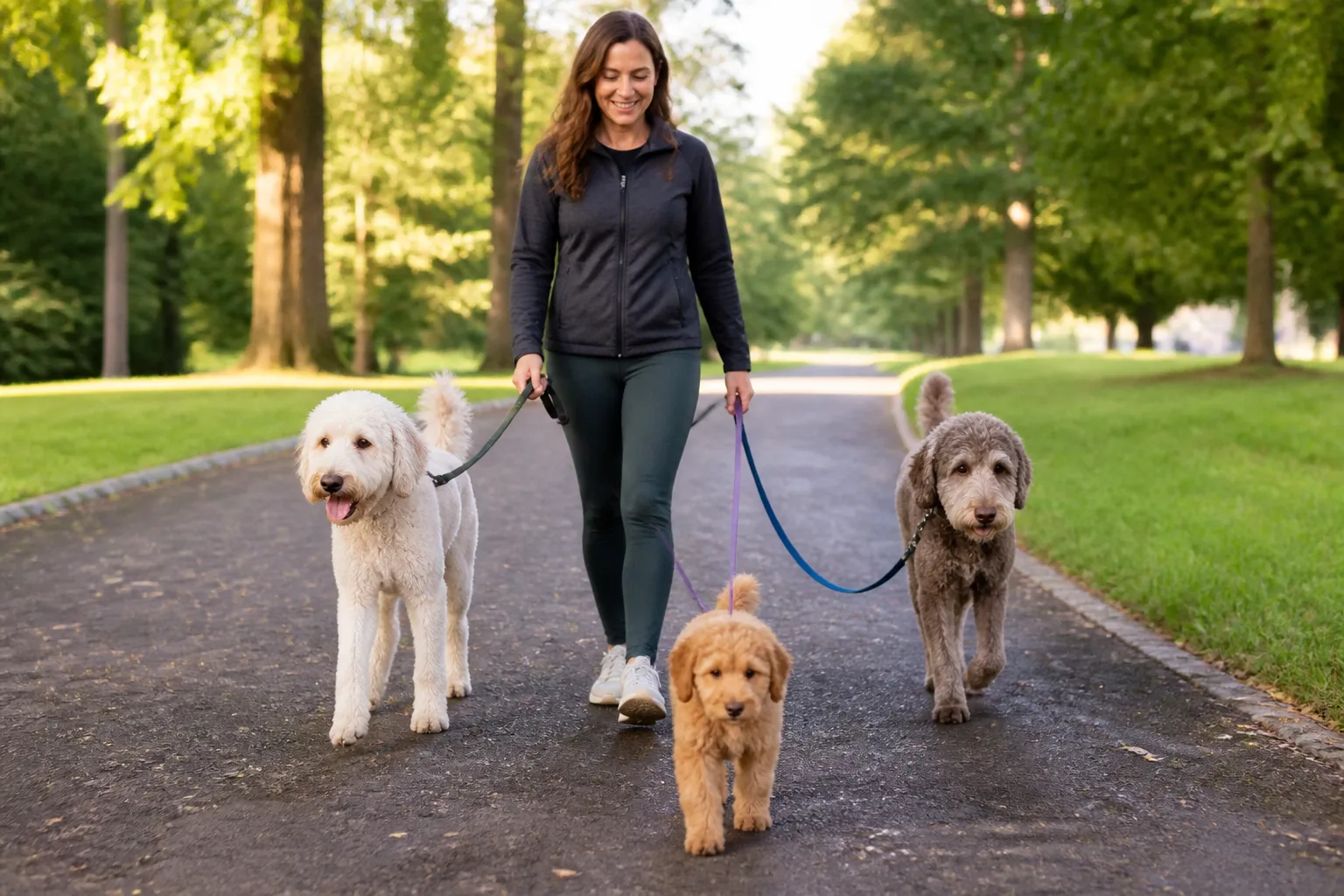
Instead, favor free play on soft, non-slip footing, where the puppy naturally rests when tired. Swimming is an excellent low-impact way to build muscle that supports the joint.
Nutrition: Grow Slow, Stay Lean
Overfeeding a large-breed puppy makes them grow too fast, which is a well-documented risk factor for developmental orthopedic disease 3 .
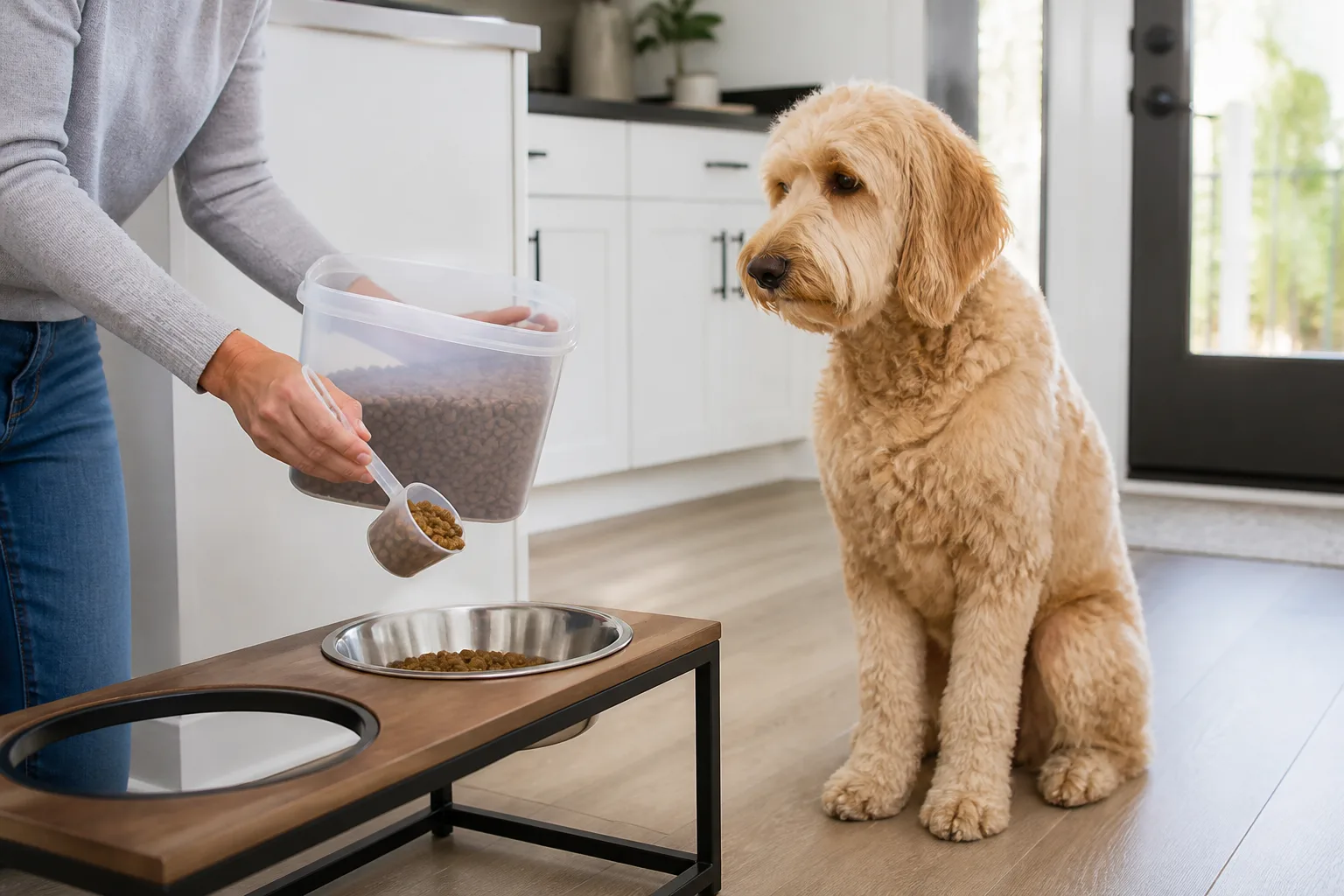
- Feed a diet formulated for large-breed growth, which controls calories and calcium to promote steady, moderate growth.
- Avoid over-supplementing calcium—more is not better for growing large-breed bones.
- Keep your puppy—and later your adult—on the lean side of the body condition scale.
Excess body weight acts as a force multiplier on already-vulnerable joints and accelerates arthritis. You should be able to feel (but not see) the ribs easily, and see a visible waist from above. Keeping a dysplastic dog lean can be as impactful as medication.
Supplementation Protocol
You don’t need to wait for a limp to support the joints, but be realistic about what supplements do and don’t do.
- Omega-3 fatty acids (EPA/DHA): Have the strongest evidence among joint supplements for reducing arthritis signs and inflammation.
- Glucosamine & chondroitin (± MSM): Very safe and widely recommended by veterinary orthopedic specialists as part of a joint-support regimen. Look for high-quality, bioavailable formulations—Dasuquin is a common clinical standard.

Dasuquin with MSM Soft Chews
Comprehensive joint health support for large dogs. Protects hip joints from early deterioration.
Affiliate link. We may earn a commission.
Recognizing Trouble Early
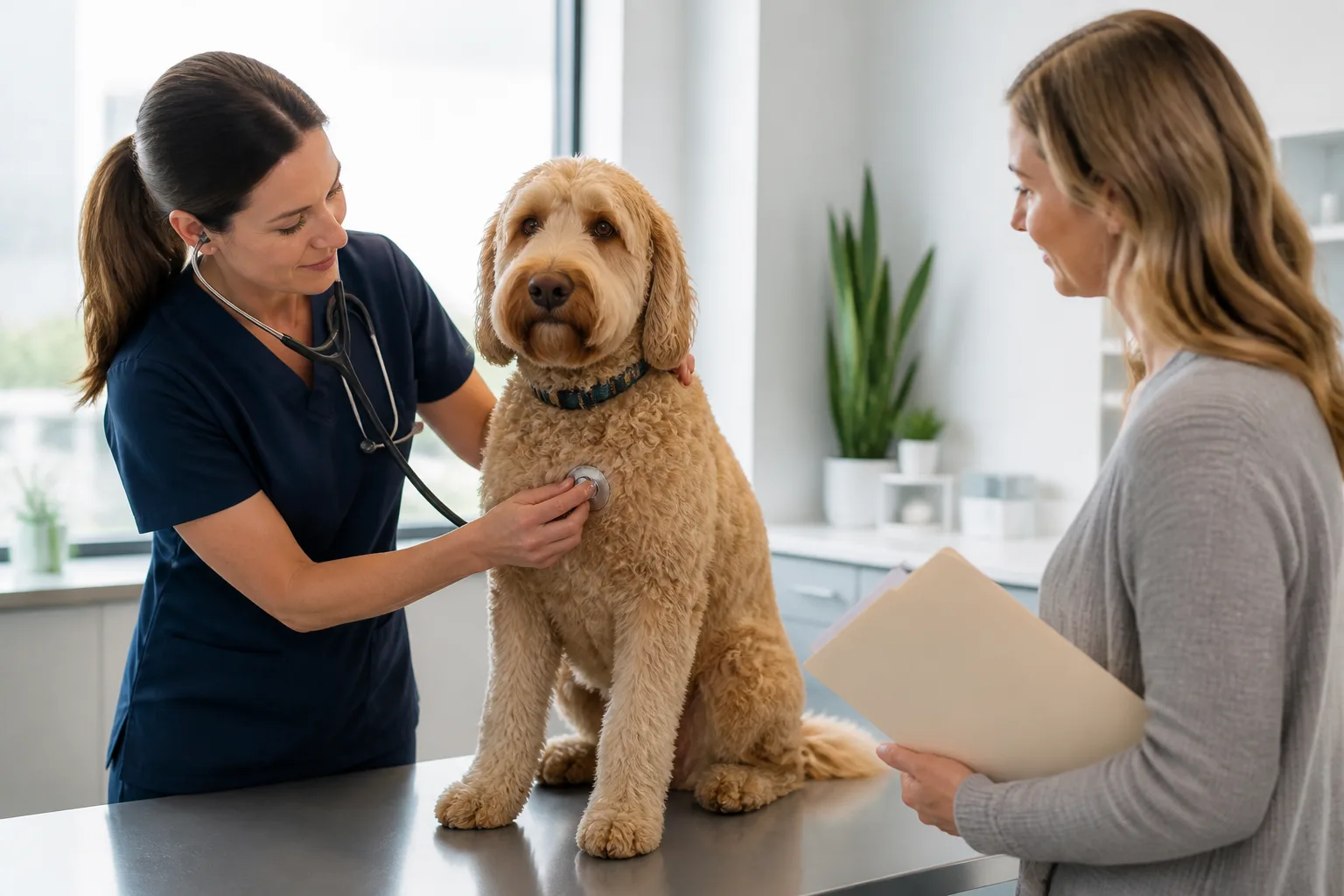
See your vet if you notice a bunny-hopping gait, difficulty rising, reluctance to use stairs, a narrow-based rear stance, or a decrease in the play and exercise your dog used to enjoy. Early diagnosis widens your options.
Management is a layered approach: weight control, controlled low-impact exercise, physical therapy, omega-3s, and—when needed—veterinary pain relief such as NSAIDs. In more advanced cases, surgical options ranging from juvenile procedures in puppies to total hip replacement in adults can restore excellent quality of life.
Expert Tip: OFA and PennHIP x-rays reveal the parents’ joint health, while broader genetic testing reveals hidden risks in the lineage. A reputable breeder should provide both. Learn more in our Genetic Health Testing Guide.
Frequently Asked Questions
Can hip dysplasia be prevented in Labradoodles? +
You can't change a dog's genes, but you can dramatically lower the risk and severity through environment: keep the puppy lean, feed a large-breed growth diet to slow rapid growth, avoid high-impact exercise until the growth plates close, and buy from a breeder who screens both parents with OFA or PennHIP.
What is the best exercise for a Labradoodle puppy's joints? +
Free play on soft, non-slip footing where the puppy self-regulates and rests when tired. Avoid forced running (jogging or biking), repetitive jumping, and lots of stairs until roughly 12–18 months, when the growth plates have closed.
Do joint supplements actually work for hip dysplasia? +
Weight control is the single most effective measure. Among supplements, omega-3 fatty acids (EPA/DHA from fish oil) have the strongest evidence for reducing arthritis signs. Glucosamine and chondroitin are very safe and widely used, though the evidence is more modest. Discuss a plan with your vet.
What are the early signs of hip dysplasia in dogs? +
Watch for a 'bunny-hopping' gait, difficulty rising after rest, reluctance to climb stairs or jump, decreased activity, and looseness or clicking in the hips. Signs can appear as early as 4–12 months or gradually with age as arthritis develops.