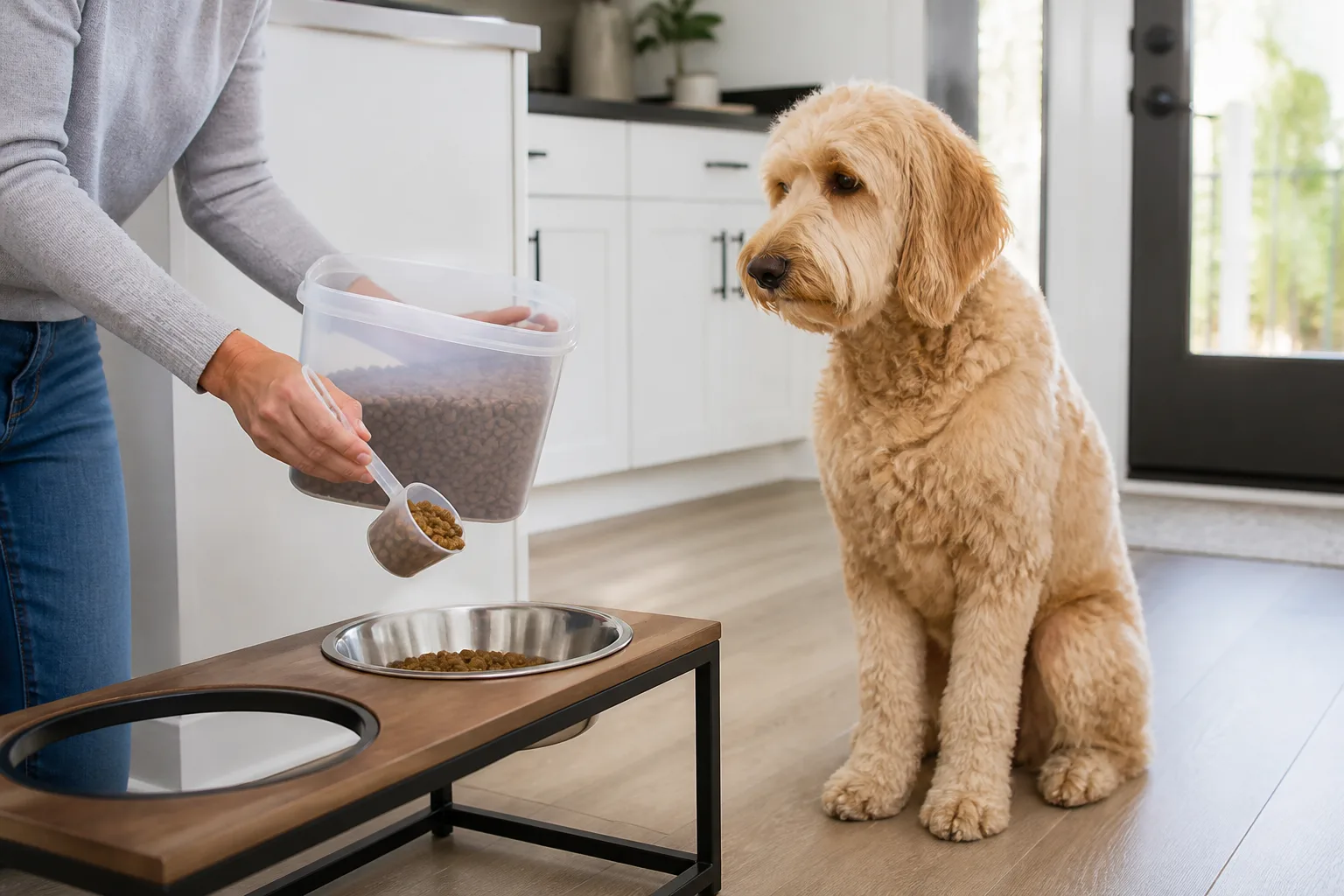
Labradoodle Puppy Nutrition: Fueling Growth & Joint Health
Expert guide on feeding your Labradoodle puppy. Learn about growth rates, calcium ratios, and preventing orthopedic issues through diet.
The Foundation of a Healthy Doodle
When you bring home that fluffy bundle of joy, your first instinct is likely to spoil them. You buy the softest bed, the squeakiest toys, and the most expensive bag of “gourmet” puppy food you can find. But in the world of Labradoodles, love is not enough. Biology must take the wheel.
Raising a Labradoodle puppy is an exercise in managing contradicting genetics. You are balancing the rapid, heavy growth of a Labrador Retriever with the leaner, lankier frame of a Standard Poodle. Get this balance wrong, and you risk permanent orthopedic damage, metabolic issues, and a lifetime of chronic pain for your dog.
This is not about buying the brand with the best marketing. It is about understanding the “Labradoodle Layer” of nutritional science—the specific intersection of hybrid vigor and hybrid risk.

The Growth Curve: Why “Puppy Food” Isn’t Enough
The most dangerous myth in dog ownership is that “a puppy is a puppy.” In reality, a Toy Poodle puppy and a Labradoodle puppy are as biologically distinct as a house cat and a bobcat.
Labradoodles, especially Standard Labradoodles, are classified as Large Breed Dogs. This classification is not just about their final weight; it is about the velocity of their growth.
The Labrador Legacy: Fast and Heavy
Labrador Retrievers are genetically programmed to grow fast. In the wild (or on the farm), this was a survival advantage. In your living room, it is a liability. If a Labradoodle grows too quickly, their bones lengthen faster than their mineral density can support. The result? Skeletal abnormalities like Hip Dysplasia and Osteochondrosis Dissecans (OCD) 1 .
The Poodle Paradox: Light and Lean
Standard Poodles, while tall, have a much lighter bone structure. They are athletes, not tanks. When you cross a heavy Lab body onto a lighter Poodle frame, you create a structural engineering challenge. Gravity is the enemy.
More is not better. Excess calcium in a large breed puppy’s diet cannot be excreted; it is absorbed into the bone, causing abnormal skeletal remodeling. Never add calcium supplements (like bone meal or cottage cheese) to a balanced commercial puppy diet.
Nutritional Requirements: The Numbers Game
To navigate this minefield, you need to look at the Guaranteed Analysis on the back of the bag. Ignore the pictures of wolves and wild salmon on the front.
1. Protein-to-Fat Ratio
For a growing Labradoodle, you want a diet that supports muscle development without fueling excessive weight gain.
- Target Protein: 26% - 30%
- Target Fat: 12% - 16%
If the fat content is too high (over 18%), your puppy will grow too fast. The energy density is too high for their skeletal timeline.
2. Calcium-to-Phosphorus Ratio
This is the golden ratio for orthopedic health.
- Target Ratio: 1.1:1 to 1.3:1
If the bag doesn’t list these exact percentages, call the manufacturer. If they can’t tell you, don’t feed it.
The “All-Stages” Trap
Many boutique dog food brands market “All Life Stages” formulas. These are legally required to meet the nutritional levels for growth and reproduction—meaning they are puppy food. However, they are often formulated for the “average” dog, not the sensitive large-breed hybrid.
The Pros
- • Convenient for multi-dog households
- • Usually high quality ingredients
- • Simplifies shopping
The Cons
- • Often too calorie-dense for large breeds
- • Calcium levels may be too high
- • Lack of targeted joint support
For a Labradoodle, strictly stick to a Large Breed Puppy formula until they are at least 12-14 months old. This ensures the caloric density is controlled to prevent rapid growth.
Feeding Schedule: Preventing the Bloat
Labradoodles, like their Poodle parents, are deep-chested dogs. This makes them susceptible to Gastric Dilatation-Volvulus (GDV), commonly known as Bloat. This is a life-threatening condition where the stomach twists on itself.
How you feed is just as important as what you feed. Establishing a routine early not only helps with digestion but is also crucial for Crate Training success, as predictable meals mean predictable potty breaks.
Our first-week puppy supplies checklist covers bowls, the breeder’s current food, records, containment, grooming, and safe transport.
The Rules of the Bowl
- Use a Slow Feeder: Labradors are notorious “Hoovers.” They inhale food, swallowing massive amounts of air (aerophagia). A slow feeder puzzle bowl forces them to eat at a safe pace.
- No Exercise Around Meals: Enforce a strict “Rest Period” of 60 minutes before and after meals. No fetch, no running, no intense play. This gives the stomach time to settle.
- Multiple Small Meals: Never feed a Labradoodle one giant meal a day.
- 8-16 Weeks: 3-4 meals per day. Their stomachs are tiny, and their metabolisms are raging fires.
- 4-6 Months: 3 meals per day. This is often when growth spurts occur, so monitor their body condition closely.
- 6 Months+: 2 meals per day. Maintain this schedule for life to keep blood sugar stable and reduce stomach distension.
Recognizing Growth Spurts vs. Obesity
It can be hard to tell if your puppy is “filling out” or getting fat. Use the Rib Check: run your hands along their ribcage. You should be able to feel the ribs easily without pressing hard, but you shouldn’t see them sticking out like a xylophone. If you can’t feel them, cut back the kibble by 10%. If the ribs are prominent, increase by 10%.
The Labradoodle Layer: Fleece vs. Wool Nutrition
One aspect often overlooked in generic feeding guides is the nutritional cost of growing a doodle coat. Whether your puppy has a fleece or wool coat, they are essentially “sheep” in terms of protein synthesis.
Hair is 95% protein (keratin). A Standard Poodle or Labradoodle is in a state of continuous hair growth (anagen phase), unlike a shedding Lab whose hair follicles enter a resting phase (telogen). This means a significant portion of your puppy’s dietary protein—up to 30%—is hijacked solely for coat production.
If you feed a low-quality protein source (like corn gluten meal or animal by-product meal), the body will prioritize vital organs (heart, liver, brain) over the skin and coat. The result is a dry, brittle coat that mats easily.
To fuel the fleece without overloading the kidneys, look for bioavailable animal proteins as the first three ingredients:
- Whole Chicken or Chicken Meal
- Lamb or Lamb Meal
- Salmon or Whitefish
Avoid plant-based proteins (peas, lentils, soy) as primary sources, as they lack the complete amino acid profile (specifically methionine and cystine) required for strong keratin bonds.
Treats: The Hidden Calorie Trap
You are in the thick of training. Sit, stay, come, down. Every success gets a treat. But have you done the math?
A single milk-bone style biscuit can contain 30-50 calories. If you give your puppy 10 of these in a training session, you have added 500 calories to their day—essentially an entire extra meal.
This “Treat Creep” is the leading cause of puppy obesity. An overweight puppy puts massive strain on developing joints, accelerating the onset of arthritis.
The “10% Rule”
Treats should never make up more than 10% of your dog’s daily caloric intake.
High-Value vs. Low-Value
- Low-Value (The Boring Stuff): Use their regular kibble for routine drills. Measure out their dinner in the morning and use half of it for training throughout the day. They are working for their meal, which engages their brain.
- High-Value (The Jackpot): Save the freeze-dried liver, cheese, or hot dog slivers for new, difficult commands or high-distraction environments. These are “currency,” not snacks.
Supplements: The Joint Insurance Policy
You might think joint supplements are for old dogs. You would be wrong.
In the veterinary world, we are moving towards prophylactic care. We want to protect the cartilage before it starts to erode. Given the high genetic risk of joint issues in Labradoodles, starting a joint supplement early is one of the best investments you can make.
Glucosamine & Chondroitin
These are the building blocks of cartilage. However, oral absorption is tricky. You need a high-quality source that includes MSM (Methylsulfonylmethane) for anti-inflammatory support.
Dasuquin with MSM is the gold standard. It uses distinct molecular compounds (ASU) that have been clinically proven to inhibit cartilage breakdown better than generic glucosamine alone 2 .

Dasuquin with MSM Soft Chews
Comprehensive joint health support for large dogs. Protects hip joints from early deterioration.
Affiliate link. We may earn a commission.
The Allergy Equation: Food vs. Environment
One of the most common reasons owners switch foods is because their Labradoodle is scratching. They assume it’s a chicken allergy.
Statistically, they are wrong.
True food allergies (cutaneous adverse food reactions) account for less than 10% of all allergic dogs. The vast majority are suffering from Environmental Allergies (atopy)—pollen, dust mites, and grass.
The Elimination Diet Myth
Switching from Chicken to Beef to Salmon to Kangaroo usually just creates a “picky eater” and upsets the gut microbiome. If you genuinely suspect a food allergy, you must conduct a strict 8-week prescription elimination diet under veterinary supervision.
The FDA is currently investigating a potential link between grain-free diets (high in peas, lentils, and potatoes) and Dilated Cardiomyopathy (DCM), a fatal heart condition. Until more research is done, stick to grain-inclusive diets (rice, oats, barley) unless your dog has a medically diagnosed grain allergy.
Genetics: The Blueprint Beneath the Fluff
You can feed the most perfect diet in the world, but you cannot out-feed bad genetics.
Metabolic conditions like Von Willebrand’s Disease (a bleeding disorder common in Poodles) or Exercise Induced Collapse (common in Labs) can affect how your dog processes nutrients and handles activity.
Knowing your dog’s genetic profile allows you to tailor their nutrition. For example, a dog with a genetic predisposition to pancreatitis needs a strictly low-fat diet for life. A dog with the MDR1 gene mutation (sensitivity to certain drugs) requires careful selection of heartworm preventatives.
The Embark Breed + Health Kit is the only DNA test we recommend because it tests for over 210 genetic health risks, giving you a roadmap for your puppy’s future medical care.
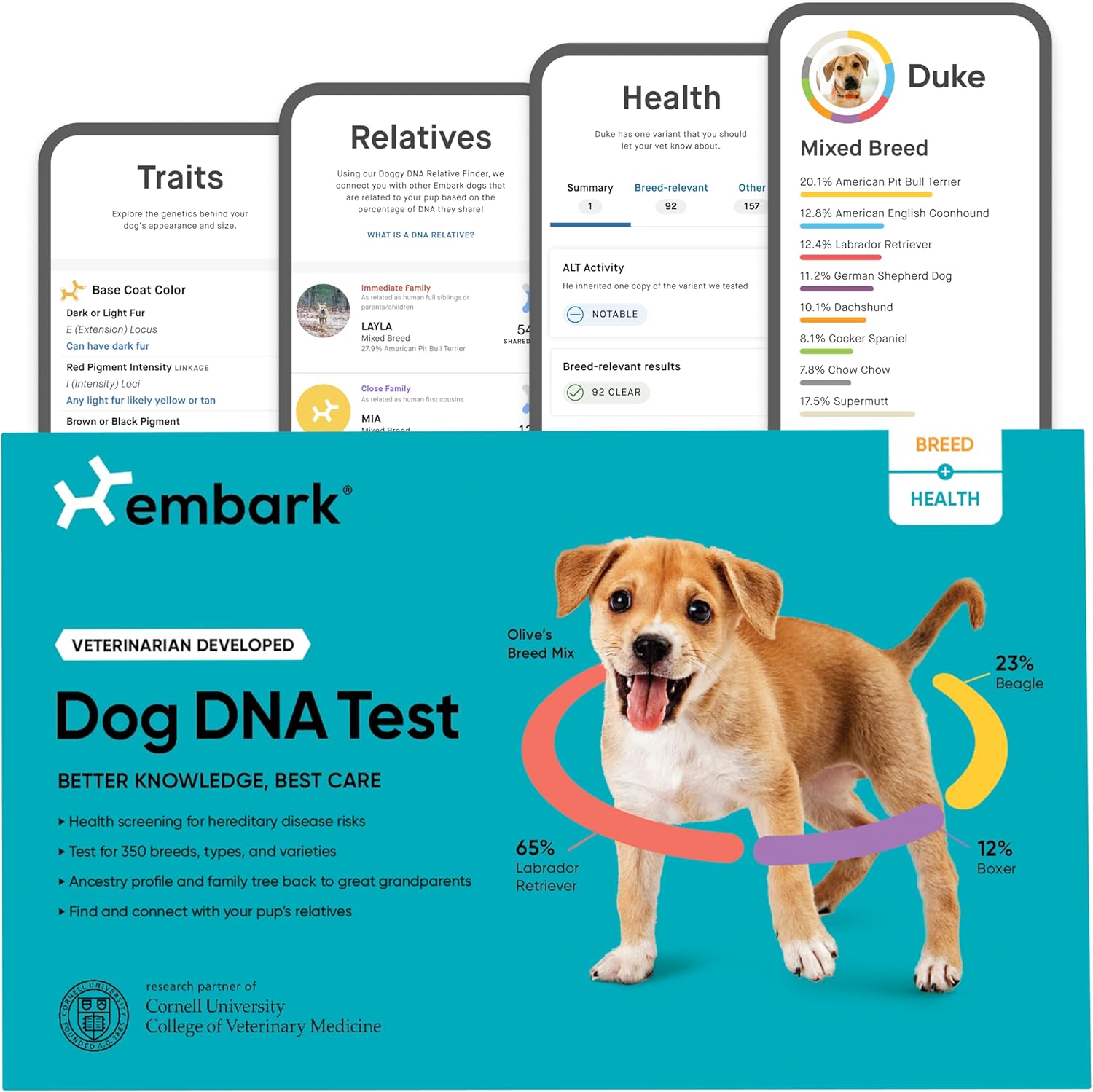
Embark Breed + Health Kit
An at-home breed and health DNA panel. Review its current variant coverage and use results alongside clinical screening and veterinary care.
Affiliate link. We may earn a commission.
The “Pickiness” Battle
Poodles are notoriously finicky eaters. Labradors will eat drywall. Your Labradoodle could fall anywhere on this spectrum.
If your puppy refuses to eat, do not start topping their food with cheese, gravy, or wet food. This teaches them that holding out results in a higher-value reward. You are training them to manipulate you.
The 15-Minute Rule: Put the bowl down. If they haven’t eaten in 15 minutes, pick it up. No treats, no snacks until the next meal. A healthy puppy will not starve themselves. They will learn very quickly that dinner is a limited-time offer.
Coat Connection: Feeding the Fleece
Your Labradoodle’s coat is a massive protein sink. Up to 30% of your dog’s daily protein intake goes solely to maintaining their skin and fur.
If your dog’s diet is deficient in essential fatty acids (Omega-3 and Omega-6), their coat will become dry, brittle, and more prone to matting. During the intense Coat Change period, nutrition is your first line of defense against the “Velcro” effect.
Look for foods fortified with:
- Fish Oil (EPA/DHA): Reduces inflammation and improves skin barrier function.
- Linoleic Acid: Essential for coat shine.
- Biotin: Supports hair strength.
Conclusion: The Long Game
Feeding your Labradoodle puppy is not just about filling a bowl. It is about constructing a biological machine that needs to run smoothly for 15 years.
Every scoop of food is a building block for their bones, their brain, and their immune system. By choosing a large-breed specific formula, monitoring their growth curve, and supplementing wisely, you are giving them the best possible shot at a pain-free, active life.
Don’t let the cute face fool you. Respect the biology. Feed the dog, not the marketing.