The Critical Period: Socialization Checklists for Puppies
You only have 16 weeks to shape your Labradoodle's temperament. Here is the science-based checklist for exposing your puppy to the world.
The Window Closes Fast
Behavioral science tells us that the “Critical Socialization Period” for dogs runs from about 3 to 14 weeks of age and begins to close around 12–16 weeks 1 . What a puppy hasn’t calmly encountered by then, they are far more likely to fear for life.
For Labradoodles—who can be sensitive thanks to their Poodle intelligence—missing this window can lead to lifelong anxiety, including severe separation anxiety.
Many owners keep puppies isolated until fully vaccinated. But veterinary behaviorists are clear: behavioral problems, not infectious disease, are the number-one cause of death and relinquishment in dogs under three years old 1 . The AVSAB recommends starting socialization and puppy classes before the vaccine series is finished—using clean environments and healthy, vaccinated playmates.
It’s Not Just Playing With Dogs
“Socialization” is a misnomer. It does not mean letting your puppy run wild at a dog park (which is genuinely dangerous for an under-vaccinated pup). It means neutral, positive exposure.
Your goal: the puppy sees a novel thing, looks to you, gets a treat, and learns “that thing is safe and boring.”
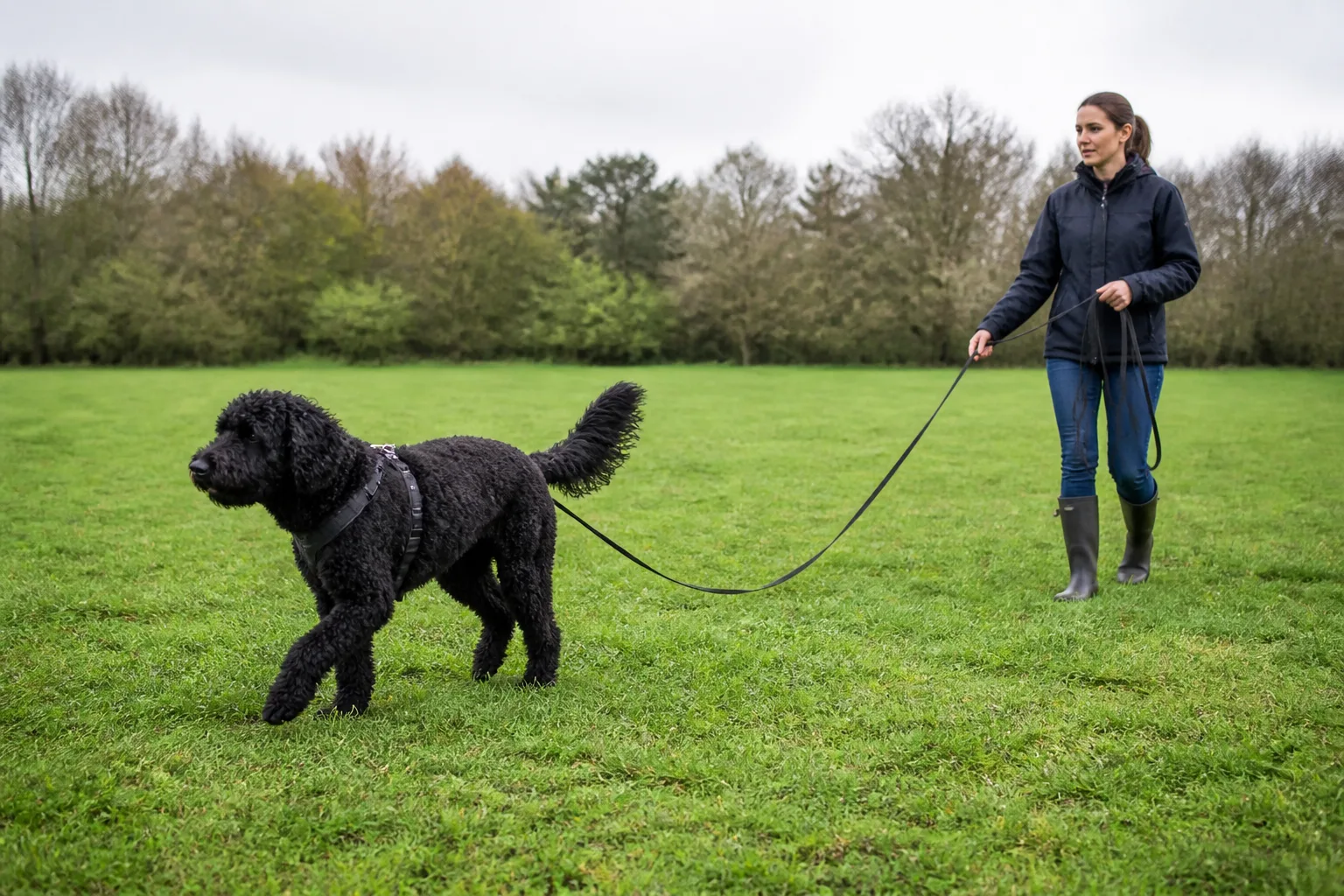
Be careful not to let your puppy greet every dog they meet on a walk. This teaches them that “dog = playtime,” which creates a frustrated, over-aroused leash reactivity once they’re full-grown. Aim for roughly 80% calmly ignoring other dogs and 20% supervised play.
Watch for Fear Periods
Puppies pass through fear periods—developmental stages (one around 8–11 weeks, and a later one in adolescence) when a single frightening experience can leave a lasting impression 2 . During these windows, keep experiences gentle and positive. This is not the time for a scary vet restraint or an overwhelming crowd.
The Essential Checklist (Weeks 8–16)
Keep a written list and check items off. Aim for calm, rewarded exposure—quality over quantity.
Surfaces
- Concrete and asphalt
- Grass (wet and dry)
- Metal grates and manhole covers
- Slippery tile and hardwood
- Wobbly surfaces (a floating dock, a playground bridge)
Sounds (start at low volume)
- Thunder and fireworks recordings
- Vacuum cleaners and hair dryers
- Doorbells and knocking
- Urban traffic and sirens
People (variety matters)
- Men with beards and hats
- People using canes, wheelchairs, or strollers
- Children (calm and supervised)
- Delivery workers in uniform
Handling (crucial for grooming and vet care)
Touch these areas daily and pair with treats:
- Inside the ears (lift the flap)
- Between the toe pads and the nails
- The tail base
- The gums and teeth
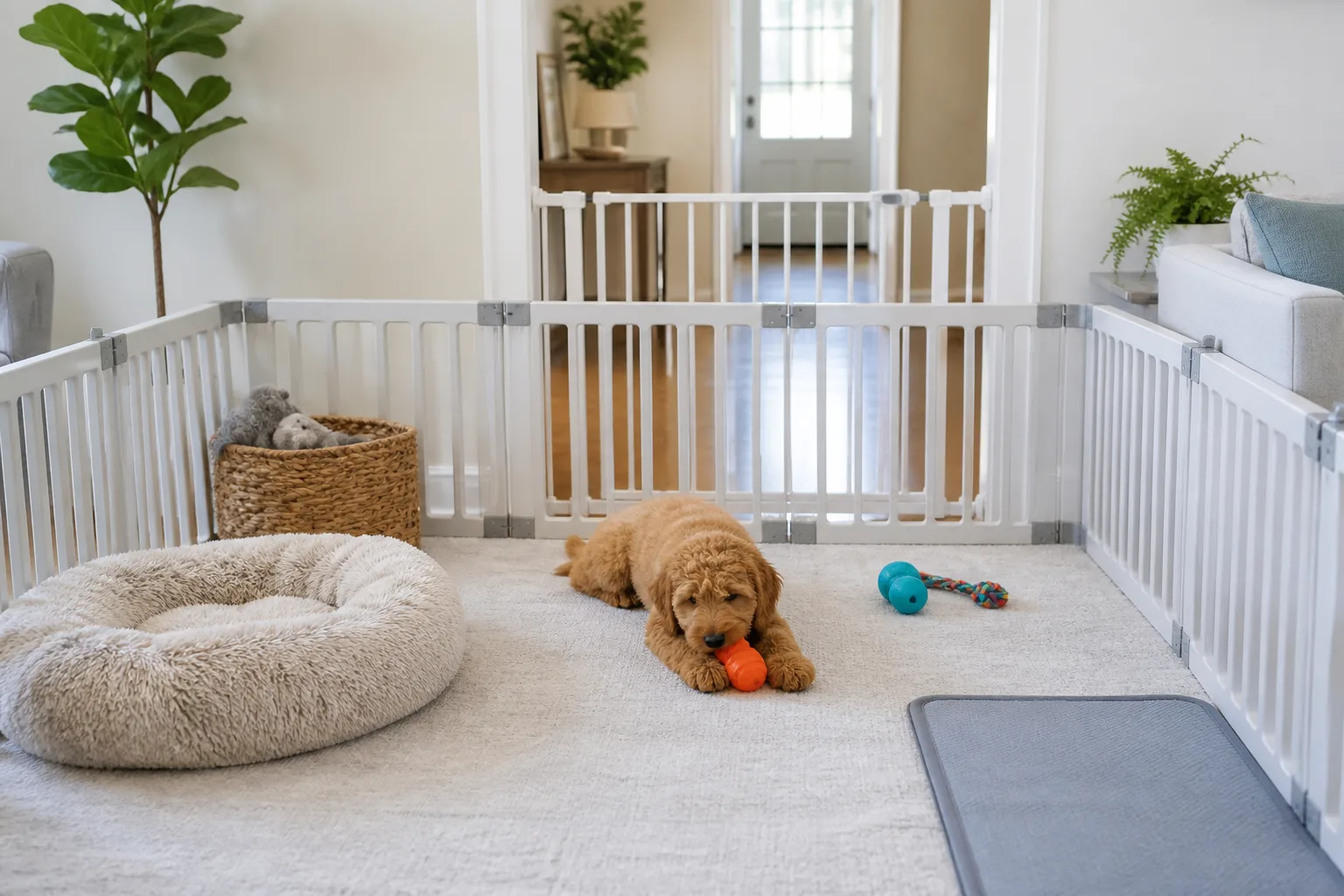
Desensitizing your puppy to the slicker brush now is critical for surviving the future coat change. Similarly, building positive associations with confinement through crate games gives them a safe haven for life.
Before pickup day, use the first-week Labradoodle puppy supplies checklist to prepare containment, identification, food, cleanup, grooming, and travel without overbuying.
Timing Rewards Is Everything
Socialization works through classical conditioning: the novel thing predicts something wonderful. That only happens if your reward arrives within a second or two. A hands-free treat pouch keeps high-value treats instantly accessible so you never miss the moment.
The “Rule of 7s” (With a Caveat)
A popular breeder protocol suggests that by 7 weeks a puppy should have been on 7 different surfaces, played with 7 types of objects, been in 7 locations, and met 7 new people. It’s a helpful nudge toward variety—but treat it as a floor, not a finish line, and never at the expense of the puppy’s comfort.
If your puppy tucks their tail, cowers, freezes, or tries to flee, you’re moving too fast. Retreat, add distance, reset, and reward bravery from afar. A puppy learning at their own pace builds genuine confidence; a puppy flooded with too much too soon learns fear.
The weeks between 8 and 16 are the highest-leverage training investment you will ever make. Spend them deliberately, and you’ll shape a resilient, confident adult doodle.
Frequently Asked Questions
When is the critical socialization period for a puppy? +
It runs from roughly 3 to 14 weeks of age and begins to close around 12–16 weeks. During this window puppies form lasting impressions about what is normal and safe. Experiences they miss during this period are much harder to introduce later without fear.
Can I socialize my puppy before they are fully vaccinated? +
Yes, and veterinary behaviorists recommend it. The AVSAB advises starting safe socialization and puppy classes before the vaccine series is complete, because behavioral problems—not infectious disease—are the leading cause of death and relinquishment in young dogs. Choose clean, low-risk environments and vaccinated playmates.
What does proper socialization actually mean? +
It means neutral, positive exposure to a wide variety of people, sounds, surfaces, and situations—not letting a puppy run wild or greet every dog. The goal is for the puppy to notice something new, look to you, and learn that it's safe and unremarkable.
What should I do if my puppy seems scared during socialization? +
Don't force it. If the puppy tucks its tail, freezes, or tries to retreat, you've moved too fast. Increase the distance from the scary thing, let the puppy observe calmly, and reward relaxed behavior. Flooding a frightened puppy makes fears worse, not better.