Senior Labradoodle Care: Comfort, Mobility, and Daily Function
Support a senior Labradoodle with veterinary monitoring, adapted exercise, traction, grooming, nutrition, pain awareness, and cognitive care.
Measure quality of life in ordinary moments
Watch how easily your dog rises, walks on floors, toilets, eats, drinks, sleeps, grooms, interacts, and recovers from activity. Small functional changes often appear before a dramatic crisis.
Home adjustments
- Add secure rugs or runners on slippery routes.
- Use ramps or steps only when the dog can use them safely.
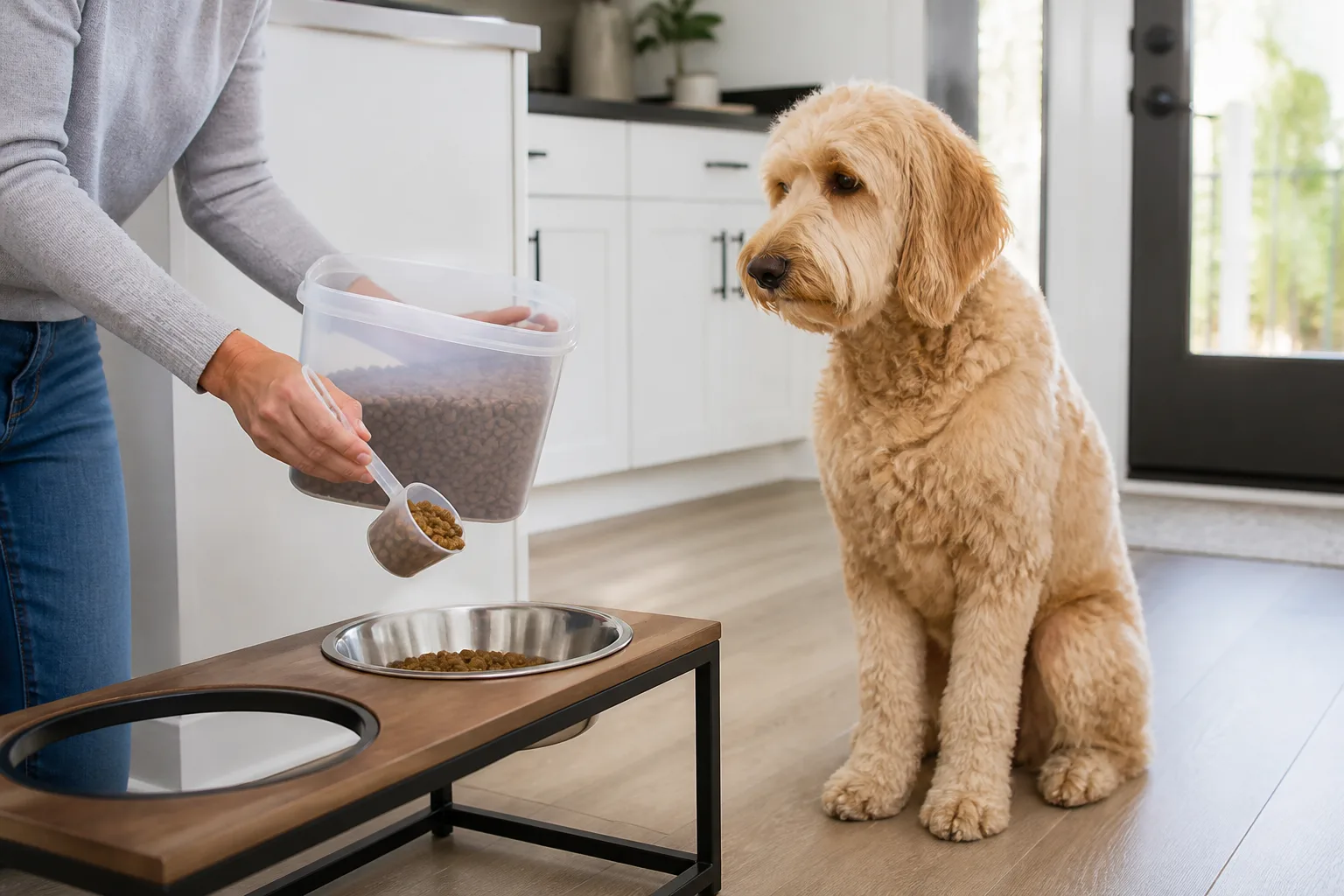
- Keep food, water, beds, and toilet access easy to reach.
- Provide supportive bedding in several social areas.
- Improve lighting for nighttime movement.
- Keep nails and paw hair maintained for traction.
Exercise and enrichment
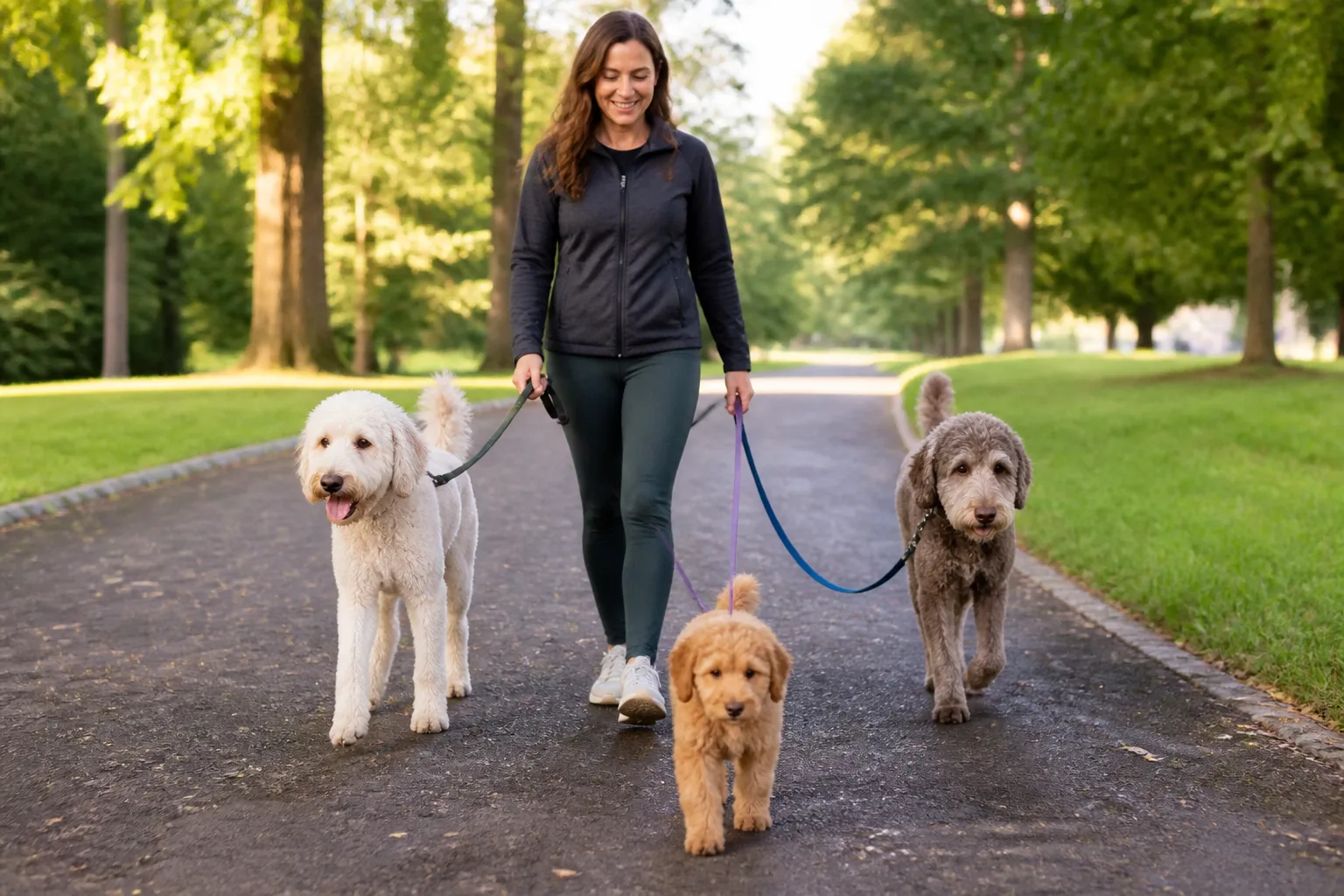
Use shorter, regular walks with sniffing and gentle strength work prescribed for the individual. Avoid the pattern of little weekday movement followed by a long weekend adventure. Continue simple training and food-search games at an achievable level.
Coat and handling
Older skin can be more fragile and joints may make standing difficult. Shorten grooming sessions, use non-slip support, choose an easier clip when appropriate, and tell the groomer about pain, lumps, sensory changes, or medication.
Veterinary monitoring
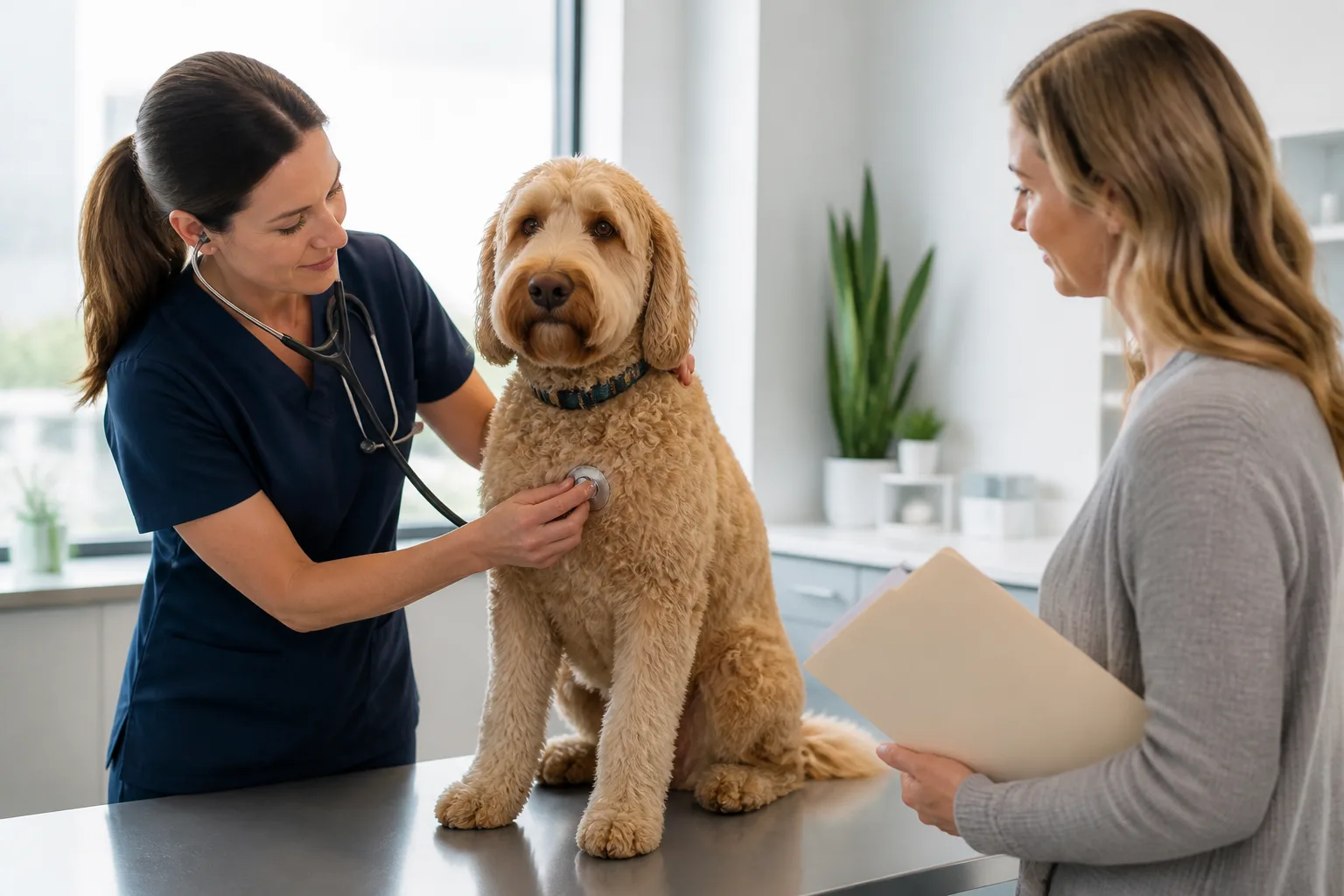
Discuss examination frequency, dental health, mobility, laboratory screening, nutrition, weight and muscle trend, vision, hearing, sleep, cognition, continence, and pain. Bring videos of movement at home and a written change log.
A room camera can help capture how a senior dog rises, changes sleeping position, drinks, or moves when people are not prompting them. Share useful clips with the veterinarian; the camera cannot determine whether a change is pain, cognition, or another medical problem.
Changes worth reporting
Night waking, staring, getting stuck, new anxiety, accidents, reduced interaction, altered thirst, coughing, weight change, difficulty eating, limping, or reluctance to be touched all deserve attention.
Read the lifespan and life-stage guide and healthy-weight guide to establish a baseline before senior changes begin.
Frequently Asked Questions
When is a Labradoodle a senior? +
Senior status depends on size, health, and individual aging rather than one birthday. Ask your veterinarian when to change monitoring for your dog.
Is slowing down normal in an older dog? +
Stamina can change, but pain, heart or respiratory disease, endocrine disease, sensory loss, and other conditions can look like normal aging and deserve assessment.
Should senior Labradoodles still exercise? +
Most benefit from regular adapted movement unless a veterinarian advises otherwise. Shorter, steadier activity often preserves function better than rare strenuous outings.