Best Dog Clippers for Labradoodles: Power, Blades, and Safety
Choose dog clippers for a dense Labradoodle coat by motor type, blade system, heat control, maintenance, and the haircut you plan to do.
The direct answer
The best clipper for a Labradoodle depends on the job. For an occasional paw or sanitary tidy, a compact trimmer can be enough. For a full haircut on dense fleece or wool, choose a serviceable, detachable-blade clipper built for sustained coat work, then budget for blades, guard combs, oil, cleaning, and cooling.
Do not choose by wattage alone. A well-maintained blade moving through a perfectly prepared coat matters more than a dramatic number on the box.
Affiliate disclosure: This page may display affiliate recommendations below. We may earn a commission at no extra cost to you. We rank tool requirements before merchant or commission.
Match the clipper to the job
| Your plan | Clipper type | Main trade-off |
|---|---|---|
| Paws, face, sanitary area | Small finishing trimmer | Precise and quiet, but too slow for a full dense coat |
| One home haircut every 6–8 weeks | Corded or cordless detachable-blade clipper | More capable, with a higher learning and maintenance burden |
| Several dogs or frequent full clips | Professional multi-speed clipper | Better endurance, but heavier and more expensive |
| Only between-groomer maintenance | No full-size clipper needed | Spend on brushing, combing, and regular appointments instead |
Five features that matter
- Detachable blade availability. You need replacement blades and sizes you can source again later.
- Heat management. A second blade is often more useful than maximum speed because you can rotate before one becomes hot.
- Cord and battery plan. Cordless improves movement; corded avoids stopping mid-coat. Battery runtime should comfortably exceed your realistic session length.
- Weight and vibration. A machine you cannot hold steadily is not a good match, even if it is powerful.
- Serviceability. Replaceable blade drive parts, accessible cleaning, and manufacturer support extend the useful life.
Coat preparation is half the haircut
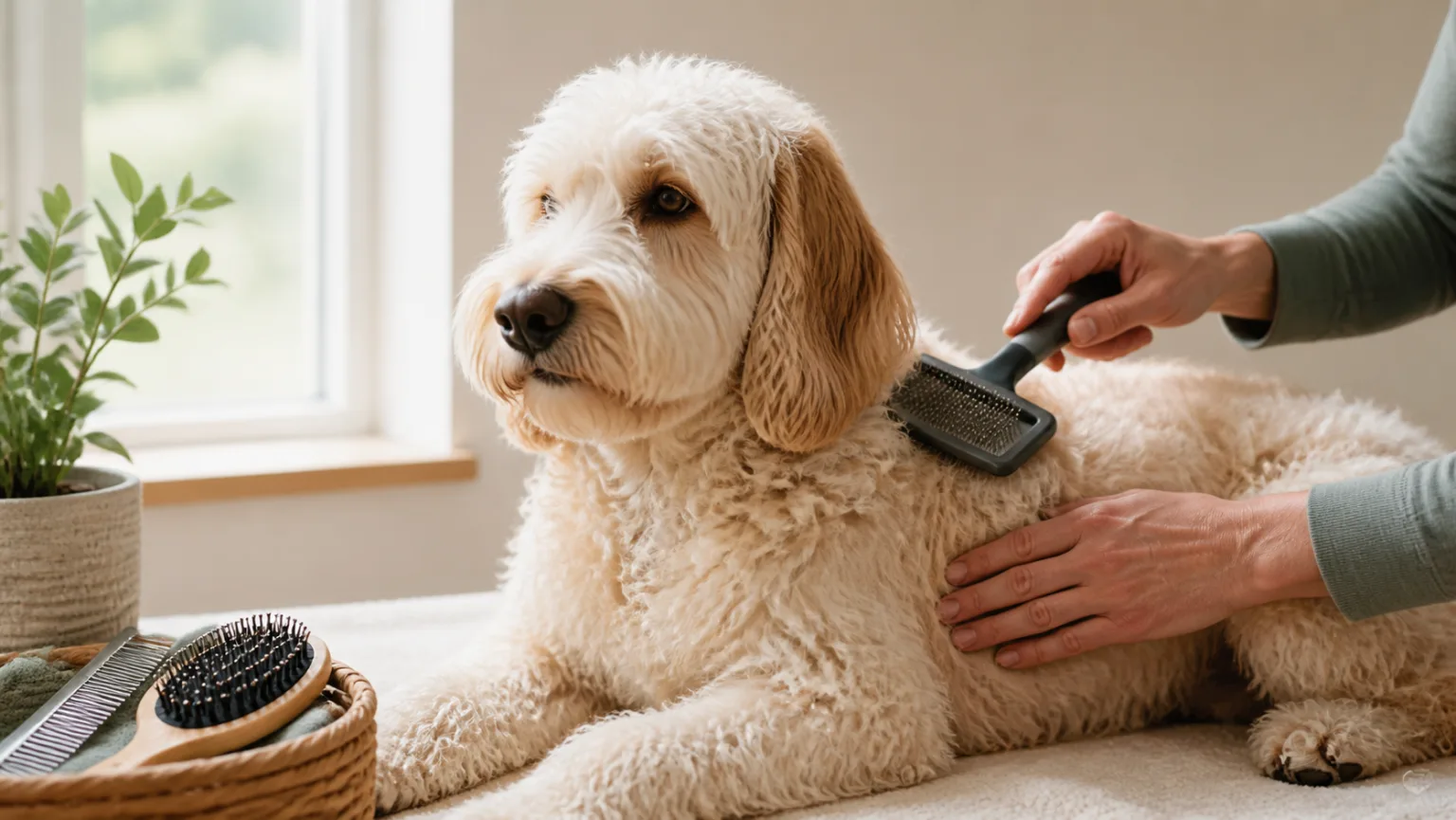
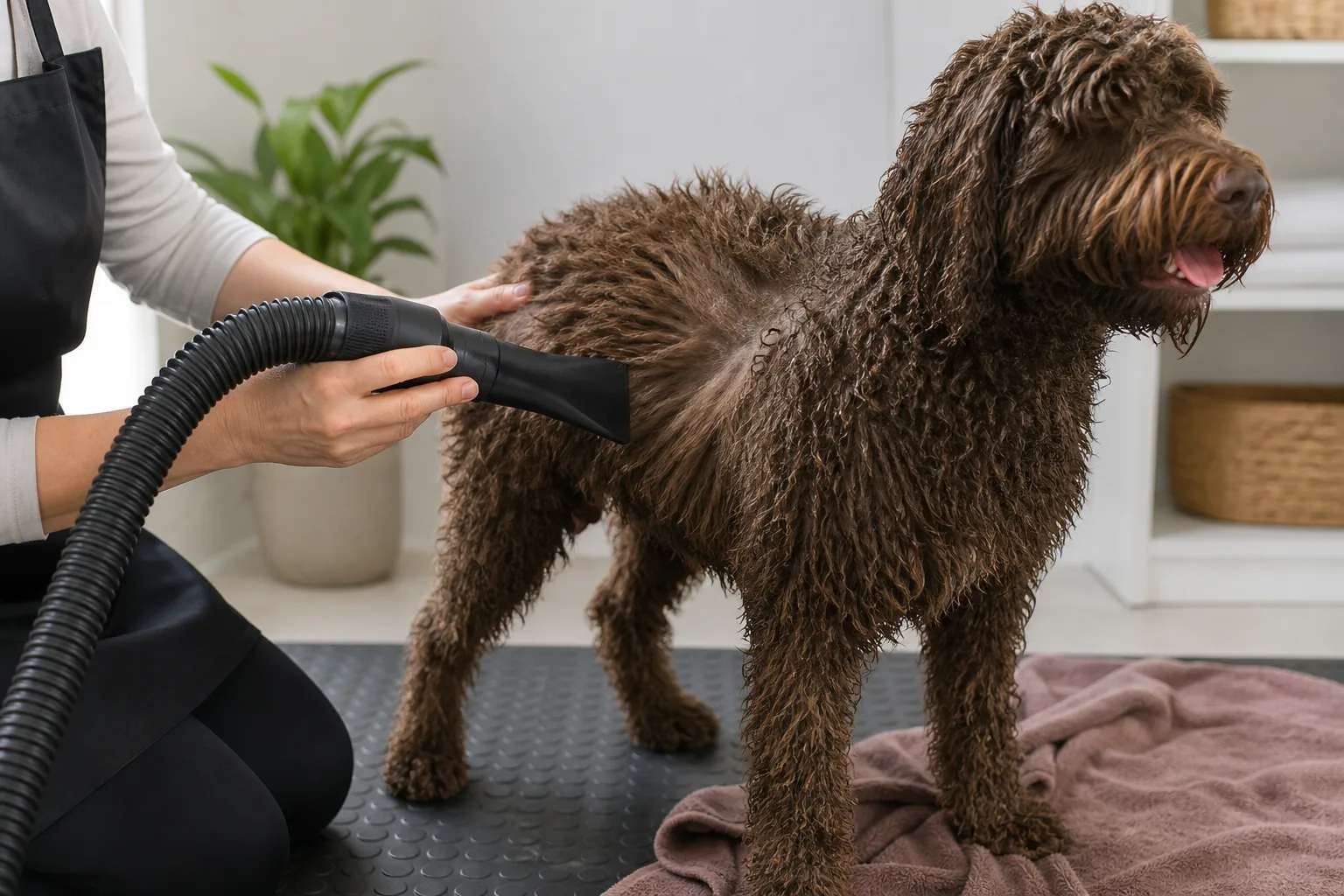
Clippers are not a substitute for de-matting. Bathe only after the coat is safely detangled, rinse it completely, dry it thoroughly, and comb from skin to tip. Dirt, moisture, and hidden tangles make clipping slower and harder on blades.
Use our grooming kit checklist and line-brushing guide to prepare the coat first.
Blade and guard-comb basics
A blade cuts to its own length; a guard comb fits over a compatible blade to leave more coat. The exact system varies, so follow the clipper and blade manufacturer’s compatibility chart rather than assuming parts fit.
Longer finished lengths demand a completely combed coat. If a steel comb will not pass through, a long guard comb will not glide through either.
Check the blade against your inner wrist throughout the session. Stop before it feels hot, remove hair, maintain it according to the manufacturer, and rotate to a cool blade. Cooling spray does not replace cleaning, lubrication, or temperature checks.
When a professional is the better buy
Choose a groomer when the coat is tightly matted, the dog cannot stand safely, the haircut involves sensitive areas you have not been taught to clip, or you cannot complete the process without force. A predictable professional schedule often costs less than buying equipment that remains unused.
Our selection method
We evaluate clipper types by coat capacity, blade ecosystem, heat control, handling, maintenance, noise, and repairability. We do not call a specific machine “best” without current approved catalog coverage and a clear fit for the reader’s use case.
Frequently Asked Questions
What type of clippers work for a Labradoodle coat? +
For full haircuts on dense fleece or wool, look for professional-style detachable-blade clippers designed for sustained coat work. Small trimmers are better reserved for paws, face, and sanitary touch-ups.
Can I clip a matted Labradoodle at home? +
Tight mats hide skin and make blade work risky. A professional groomer can assess whether a humane shave-down is needed and use techniques suited to the matting and the dog's tolerance.
Why do clipper blades get hot? +
Friction creates heat. Clean hair from the blade, lubricate it as directed, rotate cool blades, and check temperature against your inner wrist frequently.