Best Shampoo for Labradoodles: Choose by Skin and Coat
Choose Labradoodle shampoo for routine baths, puppy coats, sensitive skin, and dense fleece or wool—without confusing grooming with treatment.
Choose for the skin first
For routine baths, use a mild shampoo formulated for dogs, appropriate for your dog’s age, and simple enough that you can identify how the skin responds. Dense fleece and wool coats also need a formula you can distribute and rinse completely.
Do not choose a medicated, antifungal, antibacterial, or “allergy” shampoo from marketing alone. Recurring itch, odor, redness, flakes, sores, or ear trouble deserves veterinary assessment.
Affiliate disclosure: This page may display affiliate shampoo recommendations below. We may earn a commission at no extra cost to you. Skin needs and label directions come before merchant or commission.
Match the formula to the job
| Situation | Reasonable starting point | What it does not solve |
|---|---|---|
| Healthy adult, routine dirt | Mild dog shampoo | Underlying itch or infection |
| Puppy learning bath time | Puppy-labeled gentle dog shampoo | Fear without gradual training |
| Fragrance-sensitive household | Fragrance-free or low-fragrance dog formula | A diagnosed skin condition |
| Long, dry, tangle-prone coat | Dog shampoo plus compatible conditioner | Mats already tight at the skin |
| Diagnosed skin disease | Veterinarian-directed product and schedule | Follow-up diagnosis and monitoring |
Read more than the front label
Check whether the product is ready to use or concentrated, its dilution directions, age limits, contact time, rinse instructions, storage after mixing, and warnings for eyes and ears. “Natural” is not a safety standard, and a long ingredient list is not automatically worse than a short one.
For concentrates, measure rather than estimating. Mix only as directed and label any reusable bottle so nobody mistakes it for ready-to-use shampoo.
Bath sequence for a doodle coat
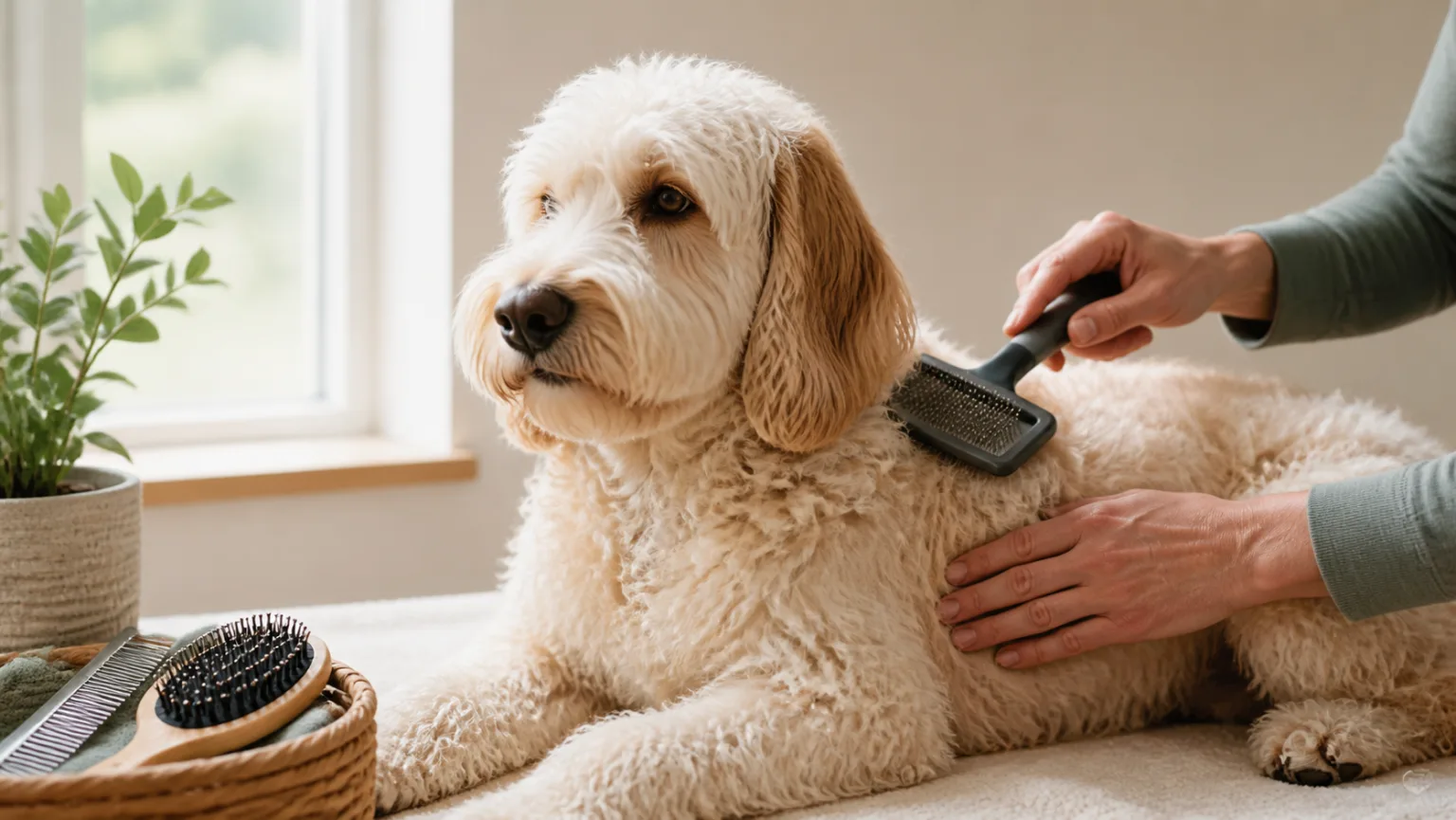
- Brush and comb out safe tangles before the bath.
- Put a non-slip surface in the tub.
- Wet the coat with lukewarm water all the way to the skin.
- Apply or dilute shampoo according to the label.
- Work with the direction of a long coat instead of scrubbing curls into knots.
- Rinse until the dense coat is completely free of residue.
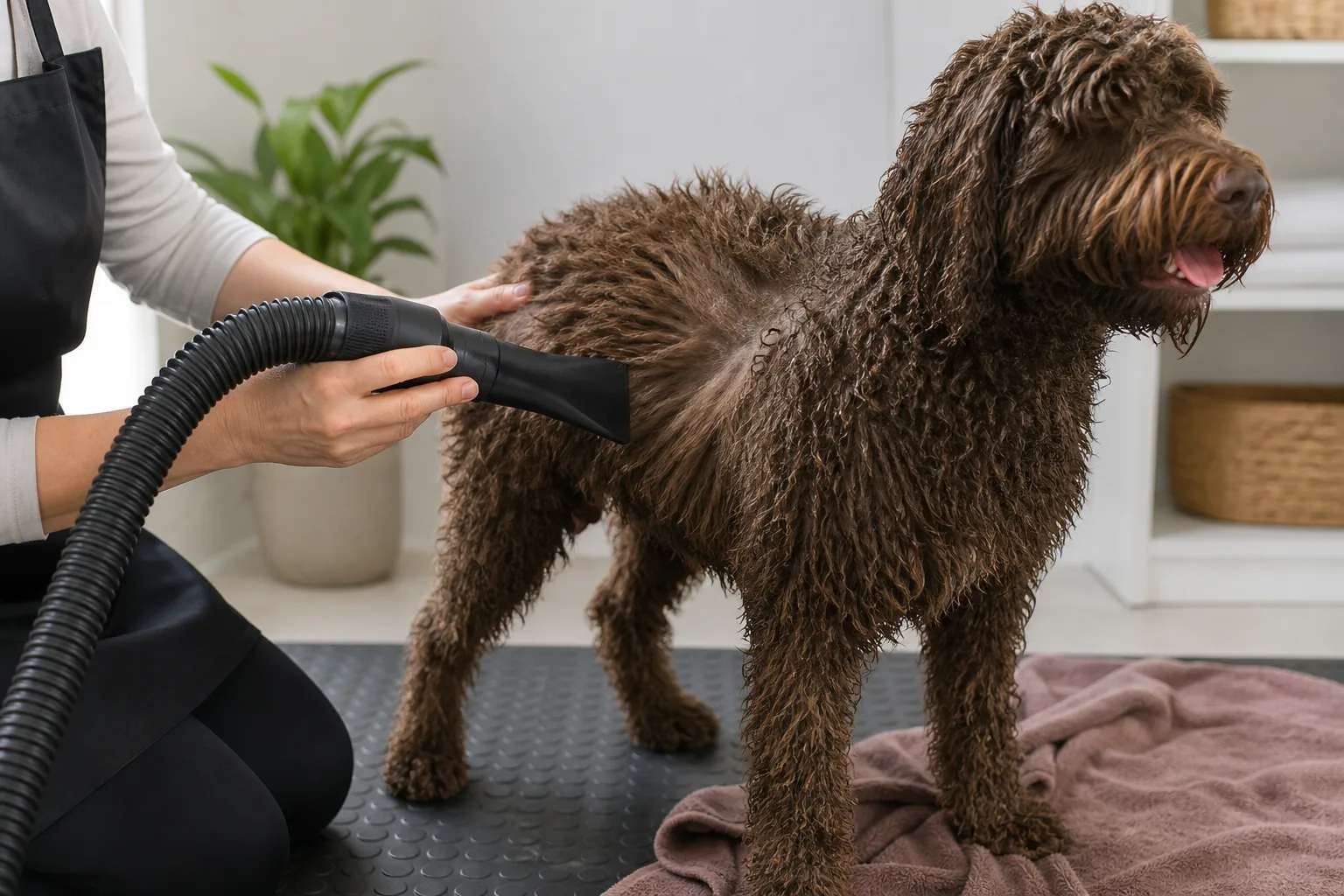
- Press water out with towels, then dry safely in sections.
Use our dryer guide for dense coats and complete grooming routine for the next steps.
Stop using a product if irritation appears. Sudden facial swelling, breathing trouble, collapse, or rapidly worsening symptoms require urgent veterinary help. Persistent skin trouble needs diagnosis rather than repeated product switching.
What about wipes and waterless products?
Wipes can handle paws or a small dirty area between baths. They are not a substitute for rinsing mud, salt, allergens, or product residue from a dense coat. Check that the product is intended for dogs and for the body area you plan to clean.
Our selection method
We assess shampoo categories by dog-specific formulation, age and skin fit, clarity of directions, rinse burden in a dense coat, fragrance, packaging and dilution practicality, and whether the product avoids treatment claims it cannot support.
Frequently Asked Questions
What shampoo is best for a Labradoodle? +
For routine bathing, start with a mild shampoo formulated for dogs and suited to the dog's age and skin. Fragrance-free or simple formulas can be easier choices for sensitive dogs, but persistent itching needs veterinary assessment.
Can I use human shampoo on a Labradoodle? +
Use a product formulated for dogs rather than a human shampoo. Follow the label, keep it out of eyes and ears, and rinse the dense coat thoroughly.
Does a Labradoodle need conditioner? +
A dog conditioner can improve slip in a long, dry, tangle-prone coat. It does not replace brushing, and every product should be rinsed or left in exactly as its label directs.