Your Labradoodle Puppy’s First Night and First Week Home
Plan a calmer first night and week with familiar food, toilet trips, sleep, a small safe area, gentle handling, records, and realistic expectations.
Make the world smaller
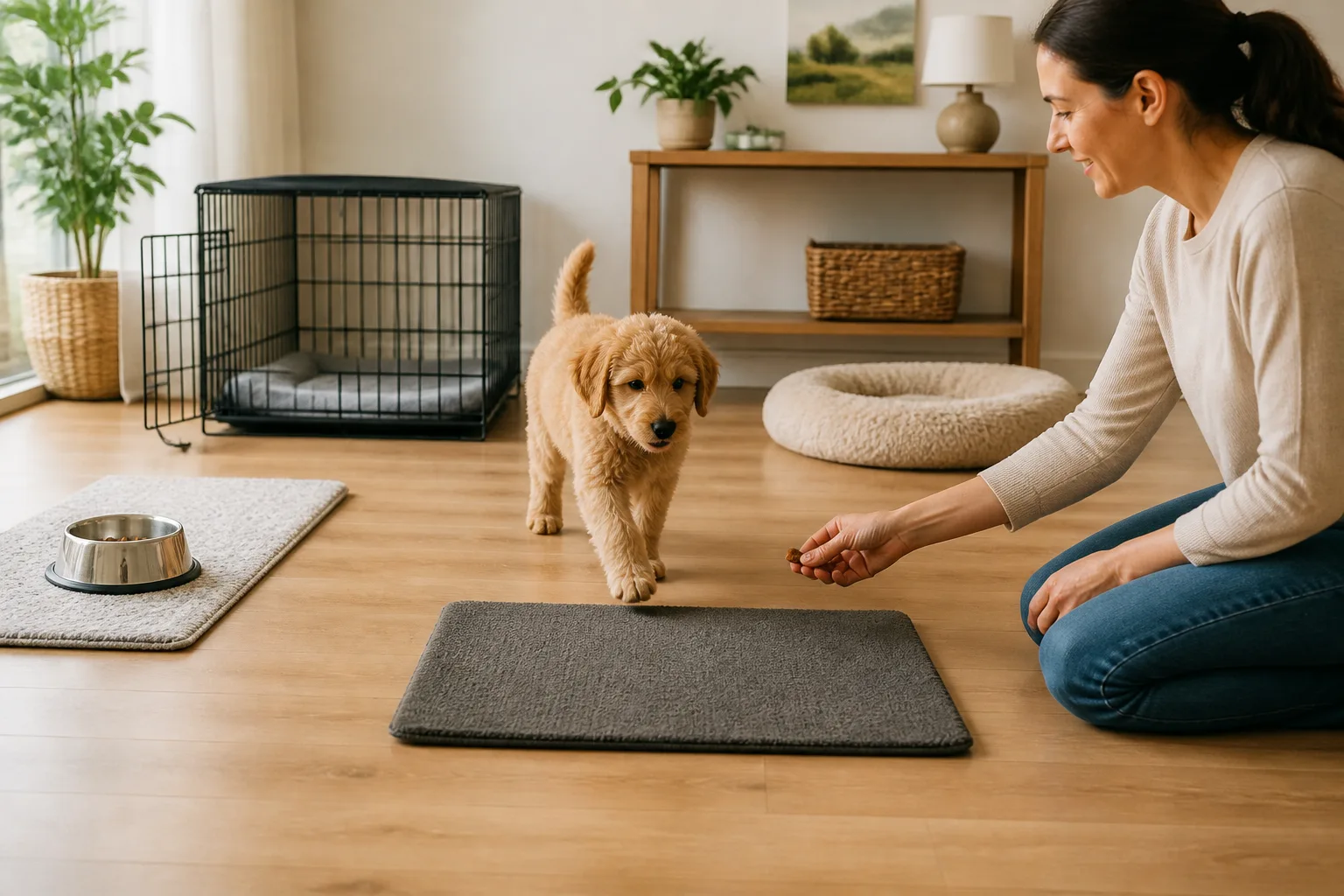
The first week should revolve around a small safe area, familiar food, frequent toilet opportunities, sleep, gentle contact, and predictable routines. Your puppy has lost every familiar smell, dog, and pattern at once.
Before pickup
Prepare the essential supplies, confirm the breeder’s food and schedule, choose a veterinary practice, secure the car setup, and decide who handles nighttime toilet trips.
The first evening
Offer a toilet opportunity on arrival, show one small area, provide water, and keep interaction calm. Feed according to the existing plan unless professional guidance says otherwise. Avoid a bath, large gathering, pet-store visit, and free access to the whole home.
The first night
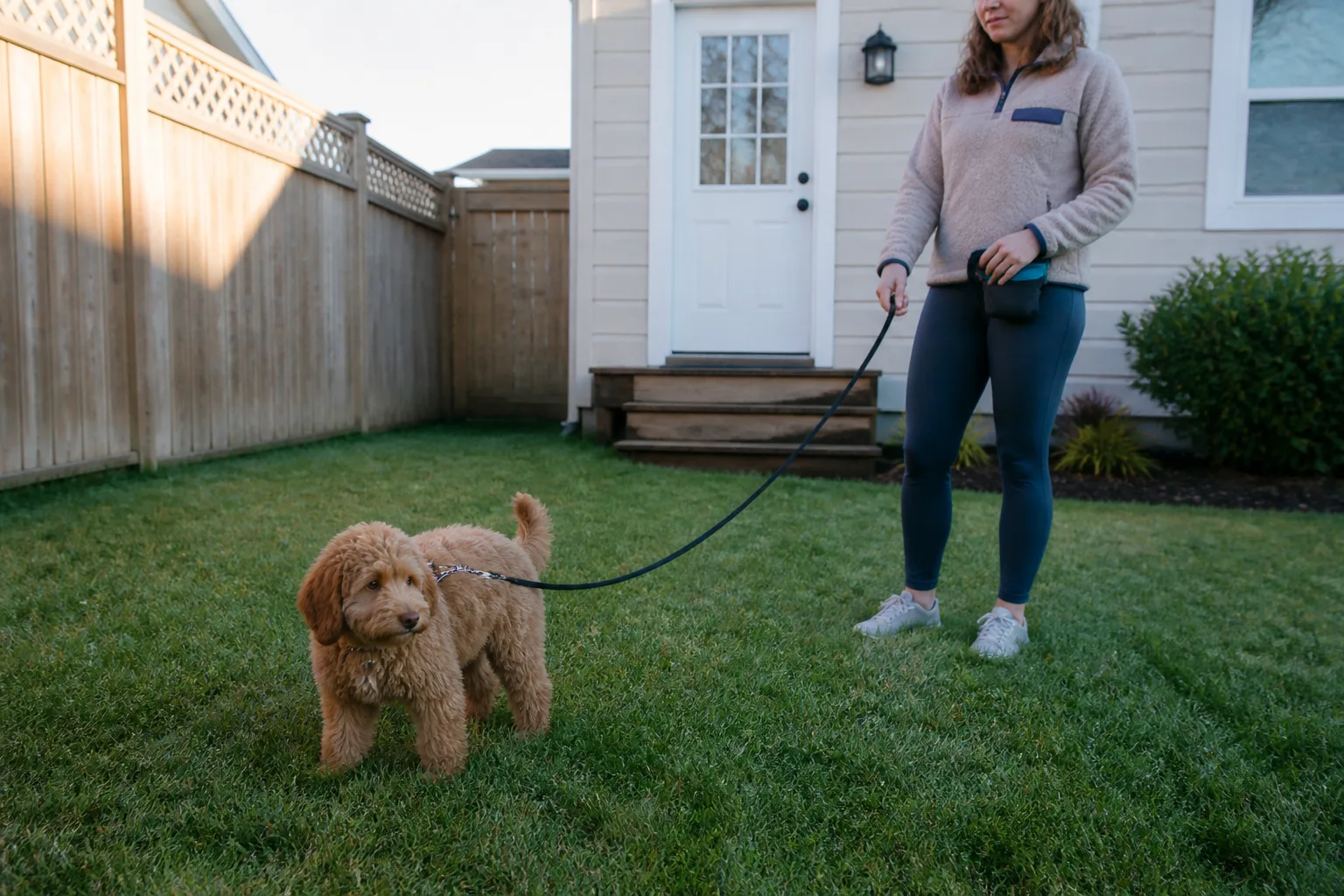
Place the sleep setup near an adult initially so you can hear movement and distinguish distress from a likely toilet need. Keep nighttime trips quiet: leash, toilet area, calm reward, and back to bed.
Responding calmly to a frightened new puppy is compatible with gradual independence training. The goal is safety and predictability, not testing how long the puppy can cry.
Days two through seven
- Follow a repeating wake–toilet–activity–rest schedule.
- Introduce grooming handling in seconds.
- Begin name recognition and easy recall indoors.
- Add one or two positive socialization experiences at a time.
- Practice tiny separations while the puppy is comfortable.
- Track food, water, stool, urine, sleep, and medication.
- Keep freedom small enough that toilet success is likely.
What is normal—and what needs help
Some whining, clinginess, interrupted sleep, cautious exploration, and routine adjustment are expected. Persistent vomiting or diarrhea, marked lethargy, pain, breathing trouble, a swollen abdomen, repeated straining, or inability to eat or drink needs veterinary advice.
Book the puppy’s veterinary visit according to the breeder’s records and clinic guidance. Bring every document rather than relying on memory.
Frequently Asked Questions
Should I let my Labradoodle puppy cry all night? +
A new puppy may need reassurance or a toilet trip. Keep the sleep area close enough to monitor, respond calmly, and build independence gradually rather than assuming every cry is manipulation.
Should visitors meet the puppy during the first week? +
A few calm, planned experiences can be useful, but protect sleep and avoid a parade of visitors. Quality matters more than quantity.
What if my puppy will not eat on the first day? +
Stress can affect appetite, but puppies can become unwell quickly. Offer the familiar food and contact your veterinarian for persistent refusal or any lethargy, vomiting, diarrhea, pain, or other concern.