How to Potty Train a Labradoodle Puppy Without Guessing
Potty train a Labradoodle puppy with event-based trips, supervision, a simple log, calm accident cleanup, and gradual freedom.
Make success easy to predict
Take the puppy to one suitable toilet area after waking, eating, drinking, energetic play, training, excitement, and before or after confinement. Reward immediately after they finish, then grant a little supervised freedom.
The four-part system
- Prevent: supervise, tether safely to an adult, use a pen, or provide an appropriately sized crate for short periods.
- Predict: log meals, water, sleep, play, urination, stool, and accidents.
- Prompt: take the puppy out before the usual interval expires or when they sniff, circle, leave play, or head toward an exit.
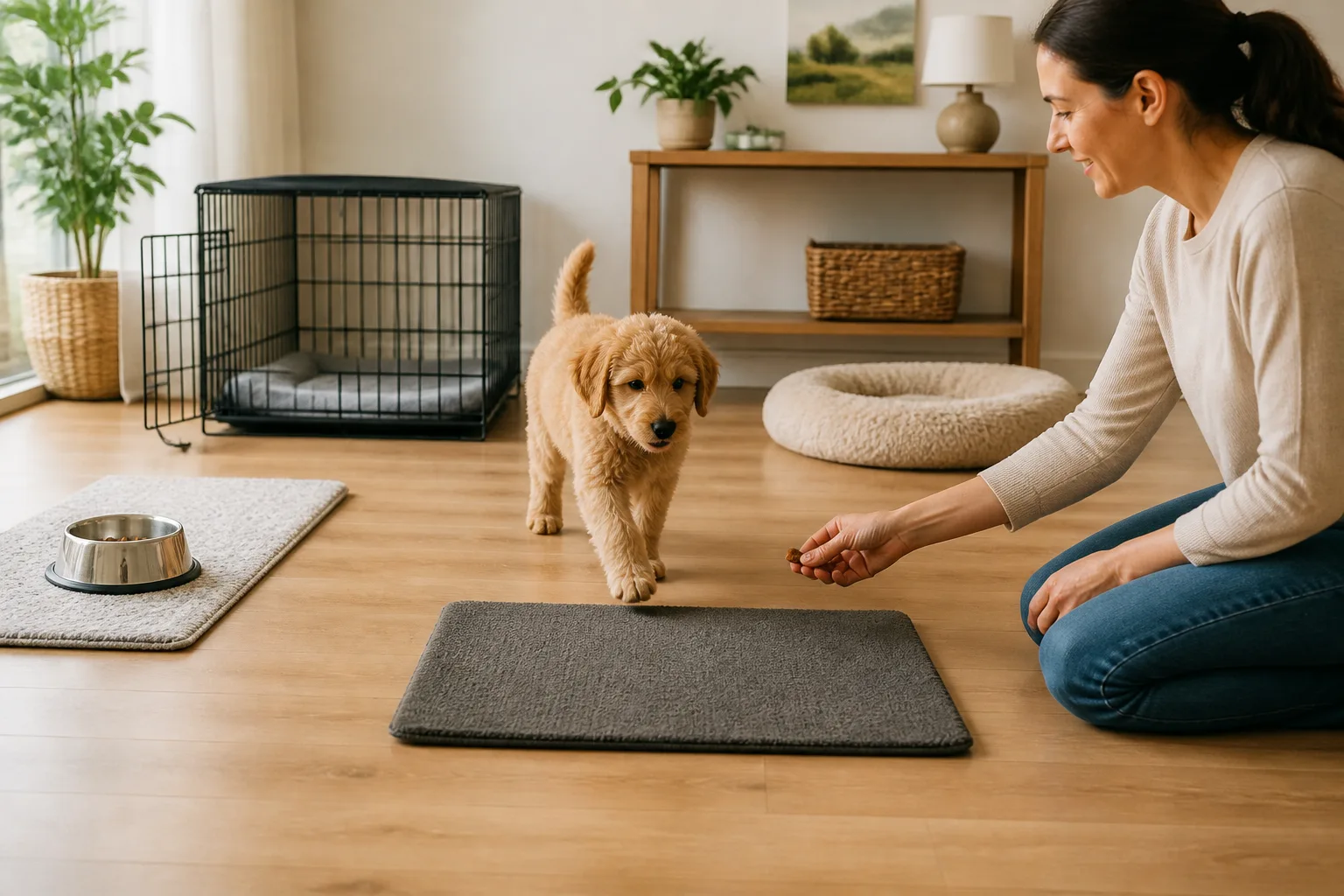
- Pay: reward at the toilet location within seconds of finishing.
Fast delivery matters more than the brand of reward. A pouch that opens with one hand can keep tiny treats accessible so you reinforce the outdoor result—not the puppy’s return to the kitchen.

Rapid Rewards Treat Pouch
Magnetic closure for quick access. Essential for timing rewards perfectly during socialization.
Affiliate link. We may earn a commission.
A useful log
| Time | Event | Result | Note |
|---|---|---|---|
| 07:00 | Woke | Urinated outside | Rewarded |
| 07:15 | Breakfast | — | Normal meal |
| 07:30 | Outside | Stool outside | Rewarded |
| 08:00 | Play ended | No result | Try again before nap |
Patterns usually appear faster than they do from memory alone.
What to do after an accident
If you find it later, clean it with an appropriate enzymatic product and adjust management. If you see the puppy begin, interrupt without frightening them, move outside, and reward if they finish there. Do not rub their nose in it, shout, or use the crate as punishment.
Crates, pens, and pads
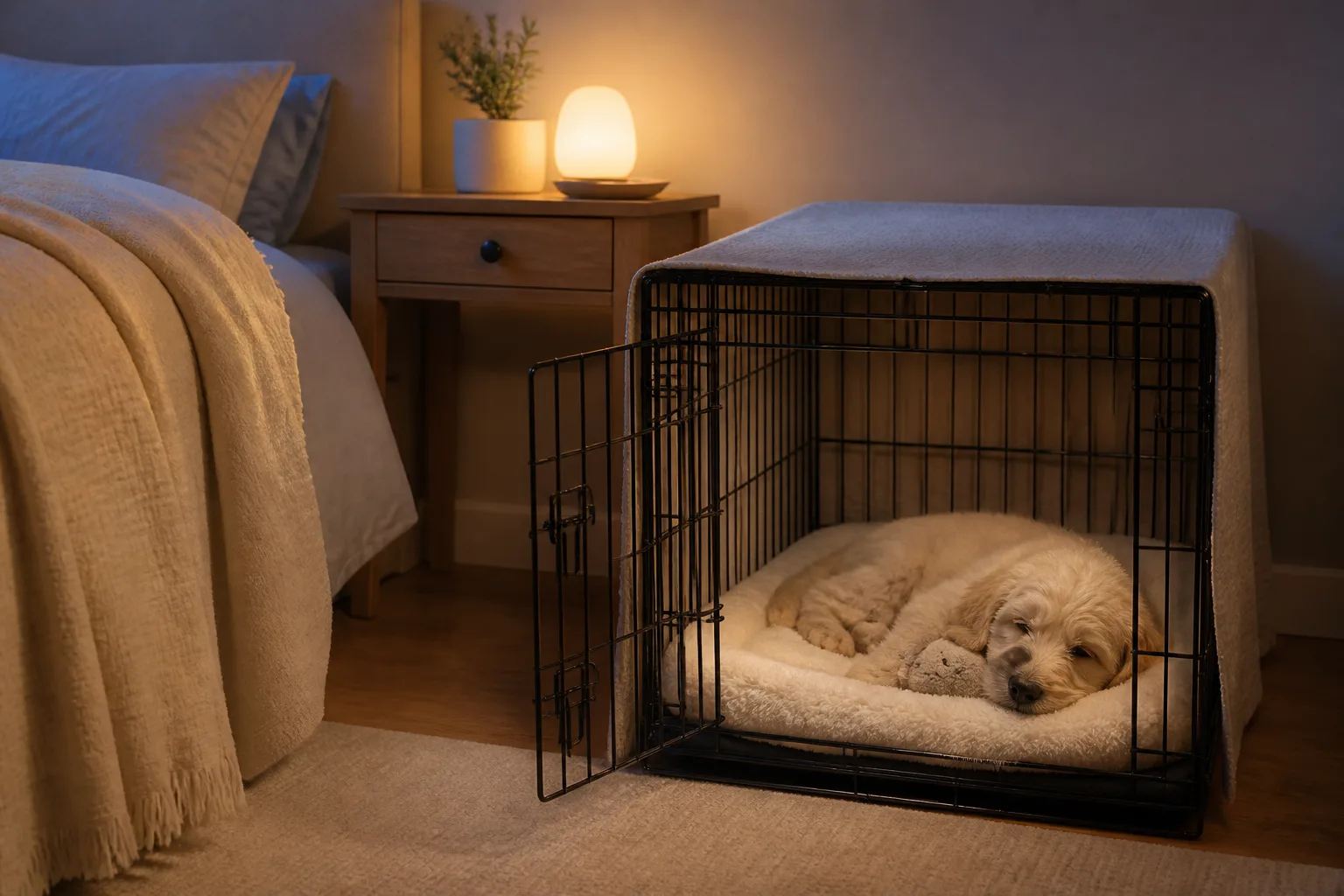
An appropriately sized crate can support short-term management because many dogs avoid soiling their sleep area. It cannot compensate for missed toilet breaks.
Pads may be necessary in some housing or medical situations, but they teach a toilet surface indoors. Decide whether that supports or complicates your final goal. A puppy pen provides room but requires a deliberate surface plan.
Adding freedom
Expand one room or short interval at a time after repeated success. If accidents return, reduce freedom and improve timing rather than deciding the puppy “knows better.”
Use the 8–16 week schedule to connect toilet opportunities with sleep, meals, play, and training.
Frequently Asked Questions
How long does it take to potty train a Labradoodle? +
Progress varies with age, history, health, schedule, supervision, environment, and consistency. Expect improvement over weeks with occasional mistakes rather than one guaranteed deadline.
Should I punish a puppy for an accident? +
No. Punishment can teach a puppy to hide toileting without teaching the correct location. Interrupt calmly only if you catch the act, then take the puppy outside.
When should accidents prompt a vet visit? +
Seek veterinary advice for frequent tiny urinations, straining, pain, blood, excessive thirst, diarrhea, sudden regression, or a puppy that cannot stay clean despite appropriate opportunities.