Labradoodle Puppy Schedule: A Flexible 8–16 Week Routine
Build a realistic Labradoodle puppy schedule for sleep, toilet trips, meals, play, training, grooming handling, and brief alone-time practice.
Use a repeating rhythm
At 8–16 weeks, a useful routine repeats: wake, toilet, food or activity, brief learning, toilet, then protected sleep. Exact clock times matter less than responding consistently after predictable events.
Example daytime block
| Moment | What to do |
|---|---|
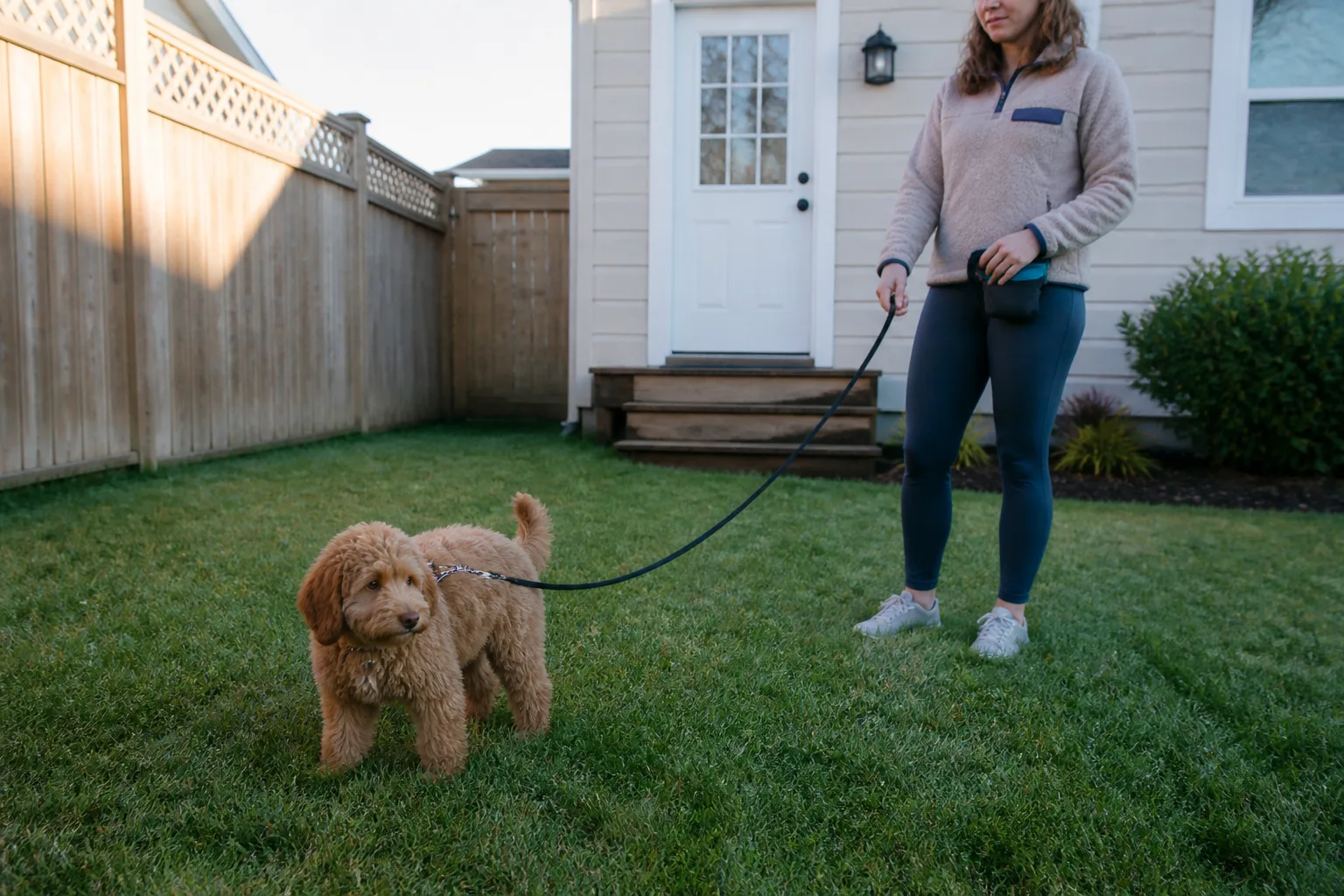
| Wake | Carry or lead directly to the toilet area |
| After success | Quiet praise, breakfast or a short activity |
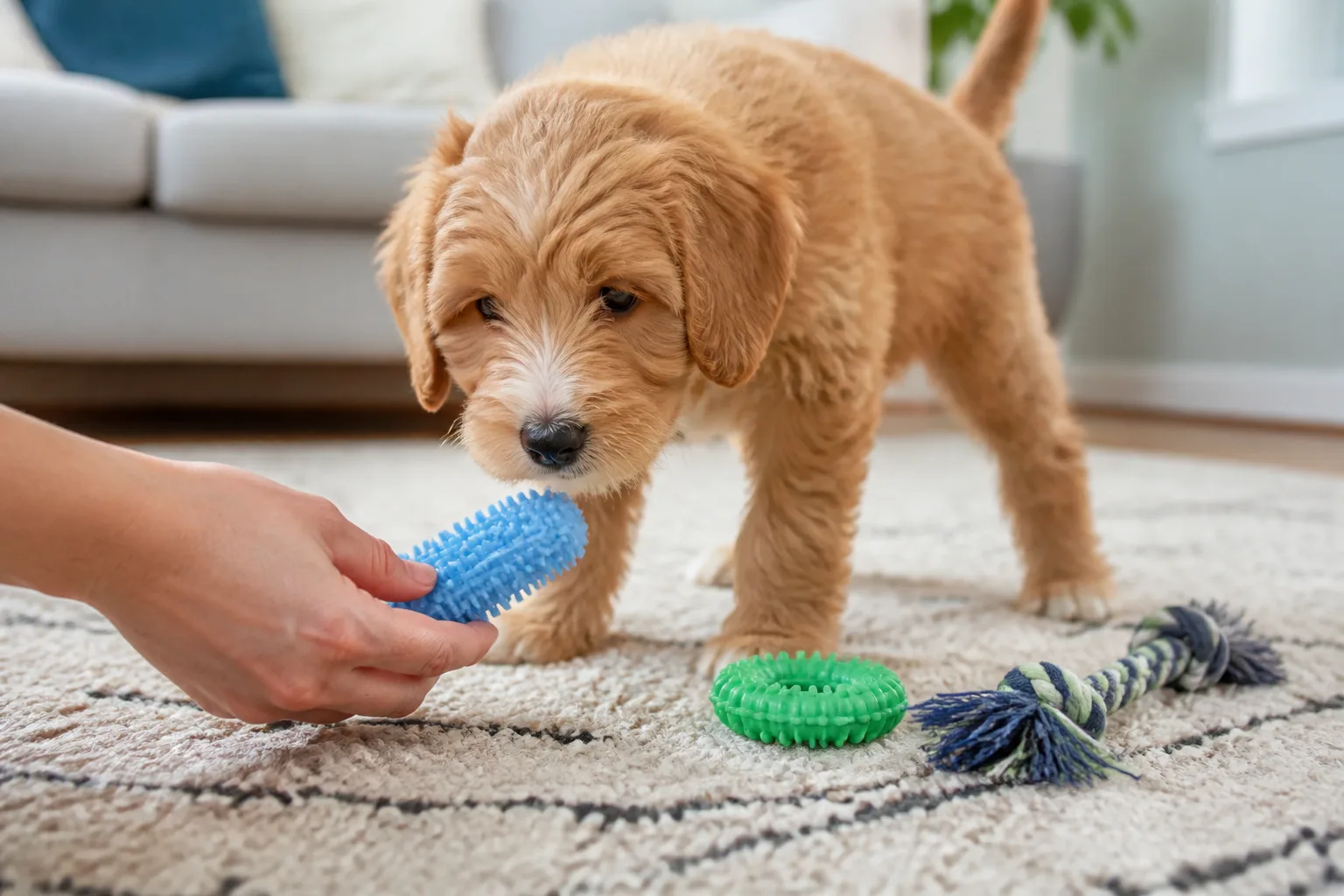
| Awake window | Play, handling, socialization, or 1–3 minutes of training |
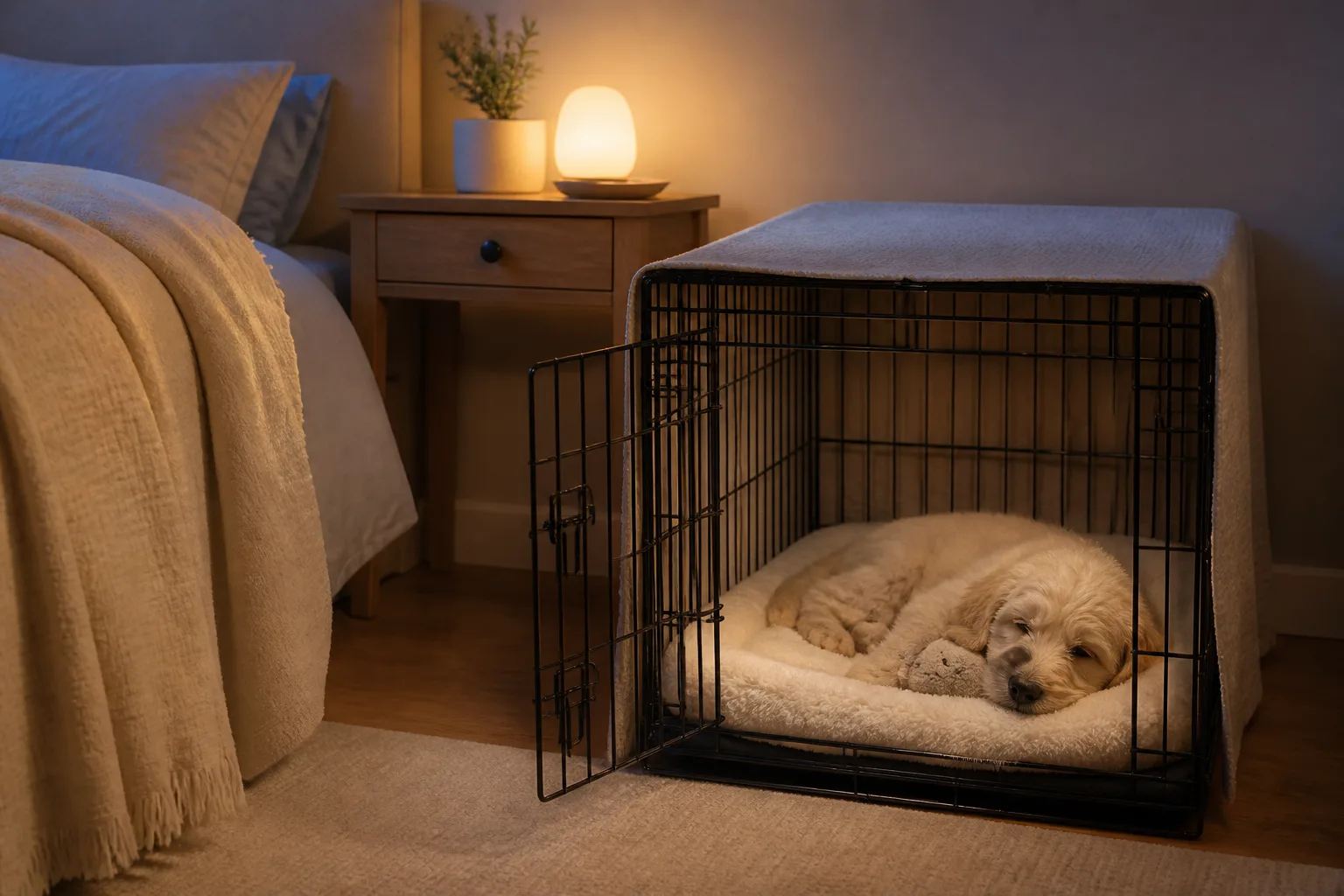
| Before rest | Toilet again, then settle in the safe sleep area |
| After nap | Repeat from the top |
Young puppies may sleep most of the day in many separate periods. Protecting sleep often reduces biting and frantic evening behavior.
Meals and toilet timing
Keep the breeder’s food and schedule initially, then change only with a plan. Offer toilet trips after meals and track results. Our potty-training guide explains how to turn that record into better timing.
What belongs in each day
- Several short positive training moments
- Calm exposure to sounds, people, surfaces, handling, and the world
- Age-appropriate free play and exploration
- Brief grooming handling without forcing a full session
- Tiny independence exercises while the puppy remains comfortable
- Chewing outlets and quiet time
- Frequent sleep
Use the socialization checklist to choose experiences without overwhelming the puppy.
For brief independence practice, a pet camera can show whether the puppy settles after you step away or becomes progressively distressed. Start with durations the puppy can handle; monitoring should inform the plan, not justify leaving them longer.
If sleep, stool, appetite, or behavior changes, a simple routine makes the cause easier to find. Do not add a new food, long outing, visitors, and a new sleep setup on the same day.
An evening sequence
Lower activity before bedtime, offer a final toilet trip, and keep nighttime outings quiet and boring. A puppy who wakes may need the toilet; do not assume every sound is manipulation.
Read the first-night guide and crate-training method before pickup.
When the routine needs help
Contact a veterinarian for persistent diarrhea, vomiting, poor appetite, lethargy, pain, frequent urination, straining, or a sudden change in behavior. A schedule cannot solve a medical problem.
Frequently Asked Questions
How strict should a Labradoodle puppy schedule be? +
Keep the sequence predictable but adjust timing to the puppy's age, sleep, appetite, toilet pattern, vaccination plan, and household. A routine should guide observation, not override it.
How often should an 8-week puppy go outside? +
Offer a toilet opportunity after waking, eating, drinking, energetic play, training, and before confinement, plus whenever the puppy shows their individual signs.
Why does my puppy become wild in the evening? +
Overtiredness, unmet toilet needs, accumulated arousal, hunger, or an overbusy day can all contribute. Try a calmer sequence and protect sleep instead of adding harder exercise.