Labradoodle Puppy Biting and Teething: What Actually Helps
Manage normal Labradoodle puppy biting with sleep, prevention, toy rotation, brief play pauses, handling practice, and professional help when needed.
Teeth need a legal job
Puppy mouthing is normal, but hands and clothing should not remain the main game. Keep suitable chew and play items within reach, prevent rehearsal when the puppy is frantic, and make hard contact end access to attention briefly and calmly.
First check the cause
| Pattern | Likely need to investigate |
|---|---|
| Wild biting after a long awake period | Sleep and reduced stimulation |
| Biting while searching or circling | Toilet break |
| Chewing furniture edges | Access to legal chew texture and management |
| Biting during handling | Smaller steps and positive conditioning |
| Sudden new sensitivity | Pain or illness assessment |
A response that stays consistent
- Freeze the hand or clothing instead of turning it into tug.
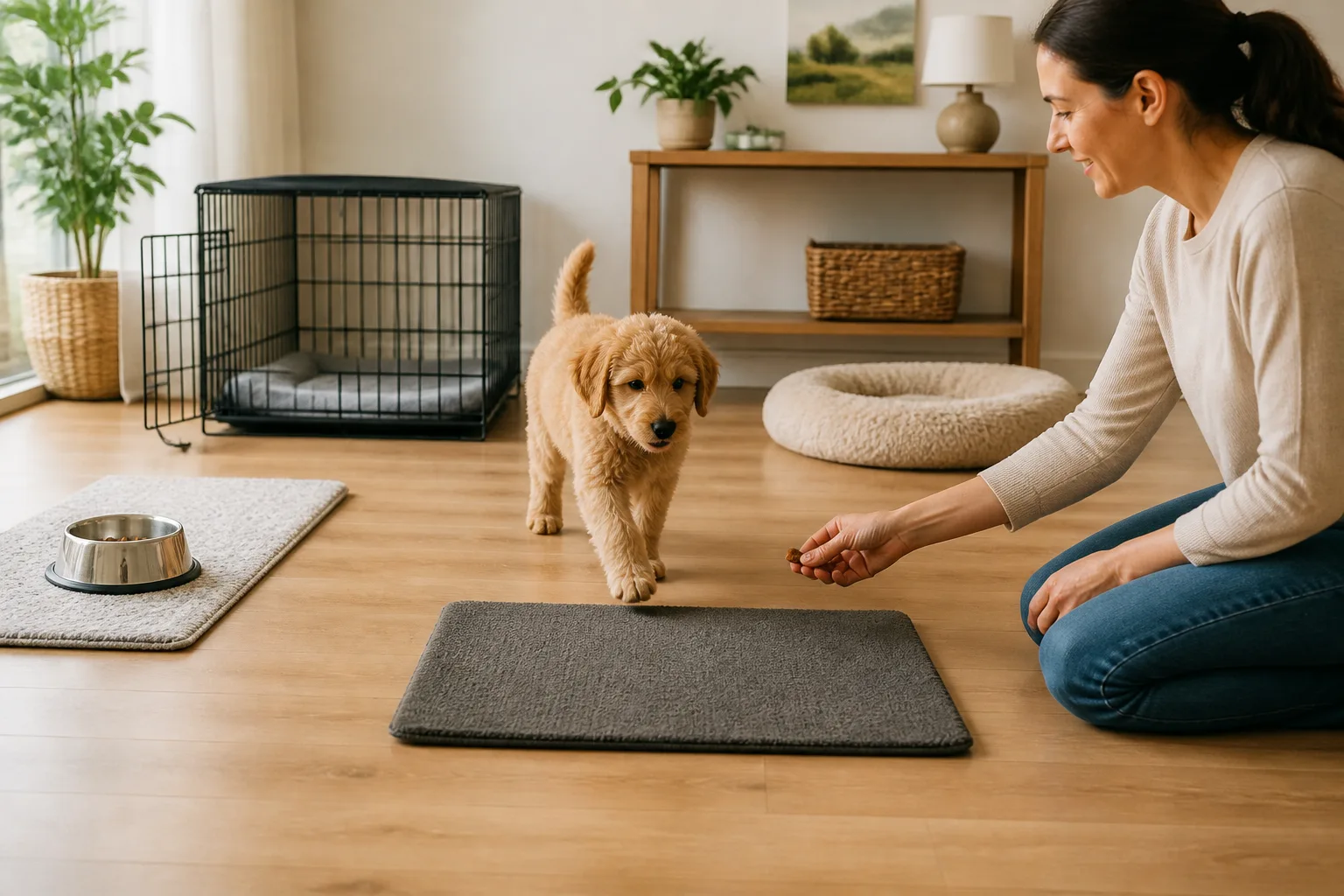
- Offer an appropriate toy if the puppy can still think.
- If hard biting continues, step behind a gate for a brief pause.
- Return without drama and reward a calmer choice.
- If the puppy immediately restarts, offer a toilet trip and quiet rest.
Avoid holding the muzzle closed, rolling the puppy, shouting, or using pain. Those actions do not teach what to bite and can create handling conflict.
Plan the environment
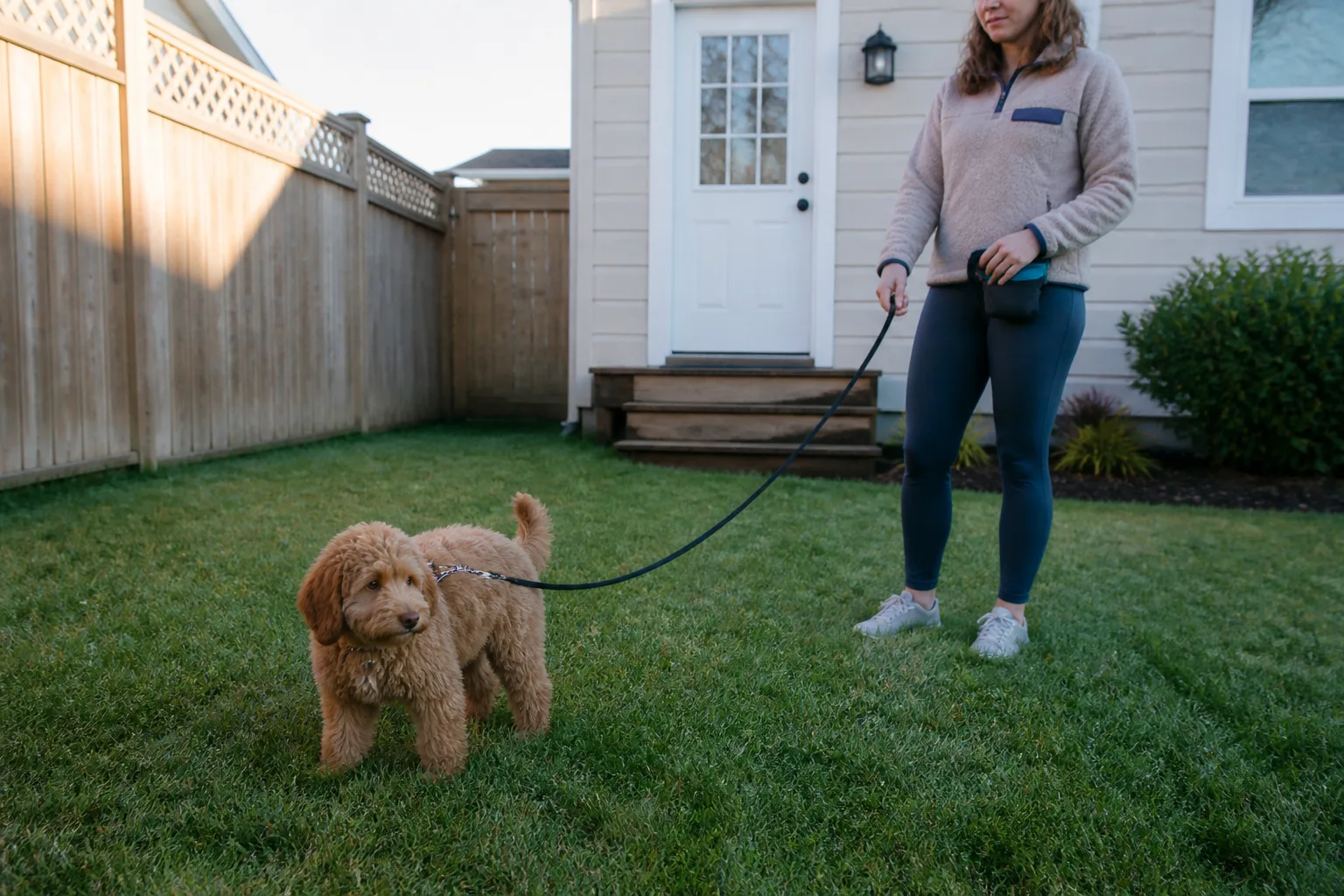
Use gates and a lightweight supervised house line where safe. Wear clothing that does not flap. Keep several toy shapes available, and rotate rather than presenting twenty at once. Separate children from a puppy who is too aroused to make safe choices.
Write down when the worst biting starts and how long the puppy has been awake. If intensity reliably rises after the same kind of activity or interval, change the routine before that point.
Teething and chewing
Choose puppy-appropriate items that are too large to swallow and inspect them for damage. Supervise new products. Very hard objects can damage teeth, while broken pieces can become choking or obstruction risks; ask your veterinarian about appropriate choices.
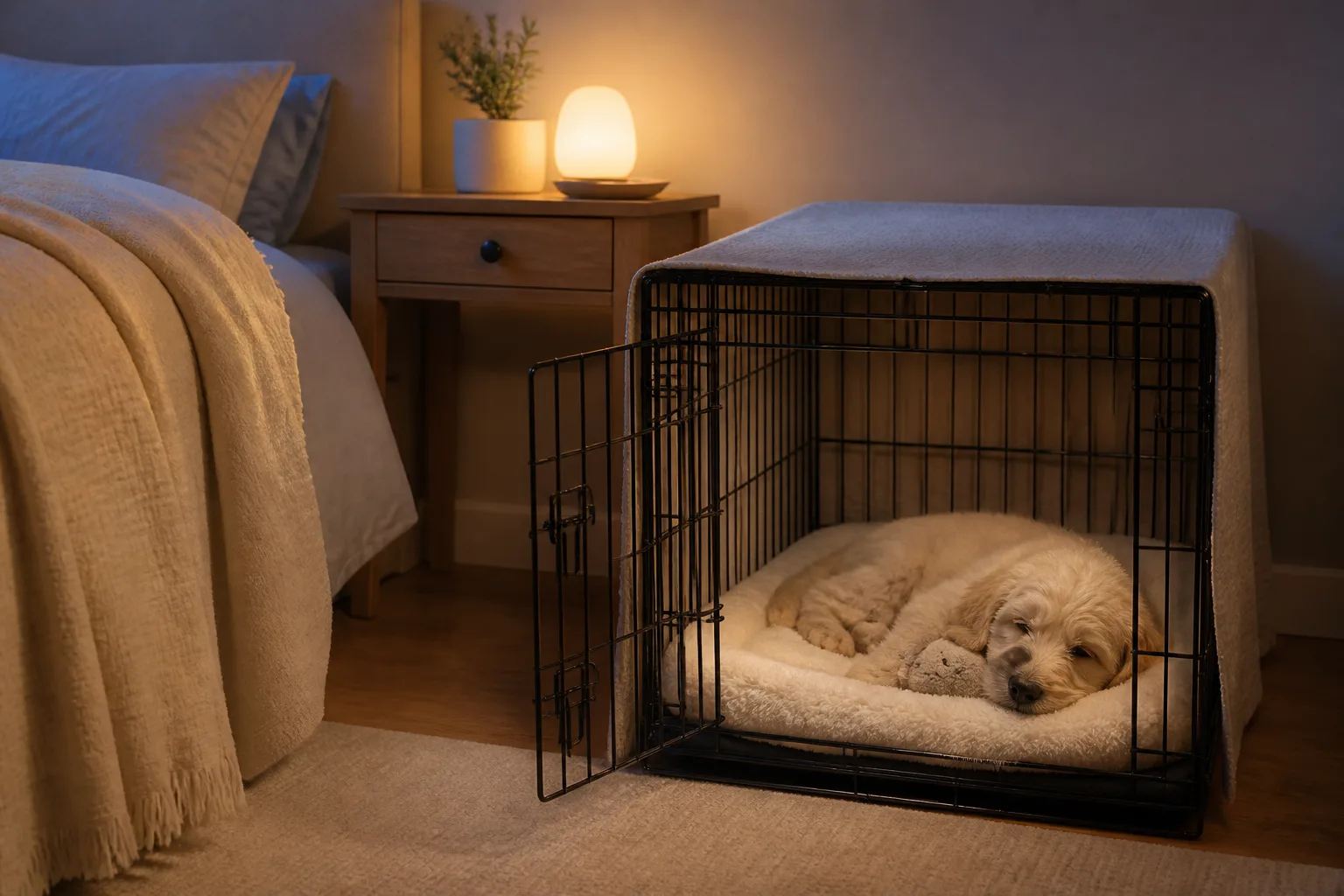
Connect biting prevention to the puppy schedule, pen and gate setup, and settle training.
Frequently Asked Questions
Why does my Labradoodle puppy bite more in the evening? +
Overtiredness, high arousal, a toilet need, teething discomfort, or a long awake period can make evening biting worse. A calmer routine and sleep often help more than extra excitement.
Should I yelp when my puppy bites? +
Some puppies pause, while others become more excited. If yelping increases intensity, quietly end interaction and use a calmer strategy.
When is puppy biting not normal play? +
Seek qualified help for injury, rigid or fearful body language, guarding, pain-related reactions, escalating intensity, or behavior the household cannot manage safely.